

At the intersection of sexual assault and authority, perpetrators who wear the badge are still overlooked.

If you or someone you know has been the victim of sexual assault, call the National Sexual Assault hotline:
1-800-656-4673
It’s been about fifteen years since I last entered a haunted house. I felt emboldened to face my fears at Universal Studios, walking through the recreations of some of my favorite horror films as actors in Chucky costumes and Evil Dead deadites jumped out of dark corridors—chainsaw wielding monsters running through the park. I went donning a new perspective on horror and the form monsters can take in our lives. Twelve years ago—this past October—I was sexually assaulted by a police officer.

A few months ago, I was relatively sure I saw my perpetrator. The very sight of him gives me panic attacks—a person I was once fond of now makes me panic at the sight of him. It was only his back side, walking with his wife and children—and if it wasn’t him, it was the ghost of an inevitable subject I was due to write about in the later part of this year. After the departure of a different problem officer I’d been writing about left the San Jose Police Department in early 2022, I took an involuntary break from writing and research—subsequently backpedaling from the events of my sexual assault. I traveled and regrouped looking for a way to reapproach my book—not anticipating how onerous revisiting my rape would be.

Sexual assault akins to a special type of horror and it’s un-mollifying. Film and television have certainly come to engender an acknowledgement of the realness of the trauma. As a longtime Monica Bellucci fan, my first cinematic experience with the subject had been her infamous rape scene in the 2002 French film Irréversible. The repercussions of sexual assault, rather than the act itself, is finally getting realistic focus in such shows as HBO’s I May Destroy You, as well as films like the 2022 Harvey Weinstein exposé She Said, and 2019’s Bombshell. Sexual violence is, as #MeToo founder Tarana Burke describes ‘a prevalent pandemic’ that even the white supremanistas of Fox News could not relegate to left wing wokeness. During one of the final lines of Bombshell, Gretchen Carlson—portrayed by Nicole Kidman—informs the audience that most people don’t believe sexual harassment allegation unless they are the victims or know someone who is, offering to be that person for us all. If you’re not a victim, you know one.
Public figures have increasingly come forward about their personal stories—from celebrities like Evan Rachel Wood, Charisma Carpenter, Rent’s Anthony Rapp and Oprah—to Brazilian singer Anitta and United States Congresswoman Alexandria Ocasio-Cortez, using their platforms to spread awareness. In 2015 Lady Gaga released her single Till It Happens to You, later detailing her assault by a music producer. It is the common exertion of power and control that thread their experiences, with social platforms like Youtube and Tiktok increasingly becoming a common place for those to shout their stories. 1 in 6 women will experience some form of sexual violence in their lifetime.
Ethical dilemmas
2021’s inevitable changing of the guard for the San Jose Police came in the form of Chief Eduardo Garcia retiring for a top position in the lone star state, and I sensed a true conclusion to my research into the department. Smoke doesn’t bellow from the roof with a new chief, but a change in morale portends in such a non-elected, political position. The appointment of Anthony Joseph Mata, who started with the SJPD in 1996, was nothing short of kismet—for he had long been on the list of officers I had researched. Years prior, as a midnight shift lieutenant, Mata had taken the police report of my sexual assault.

In his 33 reining months, Mata has waxed polemic against anti-woke symbolism, drunk cops, racist cops, bigoted cops, and sexual assault. In June 2022, officer Matthew Dominguez was arrested for allegedly masturbating in front of a woman and her adult daughter while responding to a domestic violence call. Mata, who has not been camera shy, had a camera crew filming as he booted Dominguez out the doors of the building housing Internal Affairs, onto the city street (for the Academy’s Consideration, wink). While certainly worth a thousand PR statements, past complaints of sexual assault by Dominguez had previously been laughed off by the department. In such a time of police scrutiny, it’s easy to paint oneself the hero when you control information.
But that’s not the Tony Mata I knew. I’ll get to that.
It is well known district attorneys and police cohabitate in the unholy union of lopsided justice. So, it’s worthy to reference Santa Clara County District Attorney Jeff Rosen’s statement regarding a previous PSV case: “Although rare,” Rosen states, “on-duty misdeeds bestow an unjustified blight on the stellar reputation of our hard-working peace officers”. To correct Rosen’s bad apples delusion, police sexual violence is not rare, but the prosecution of it is. In a California Law Review article, between 2009 and 2014, “nearly a thousand police officers nationwide lost their licenses as a result of sexual violence allegations”. Prosecutors make useful bedfellows for some officer perpetrators as they slip through the fingers of justice.
On average, only 5% of sexual assaults are prosecuted.
Mata, who questioned an expansion of police oversight in 2022, appears convinced oversight vitiates police identity, more than its function. His determination to publicly display SJPD as “self-cleaning” may just be the trepidation of facing a similar disposition of those under DOJ parental guidance—like California departments Oakland, Los Angeles, and Vallejo, as well as Louisville, Kentucky, New Orleans, and Seattle, Washington—castrating the departments freedoms and autonomy to do as they please by the checks and balances funding them. Consent decree or not, chiefs and their troubled departments don’t want to be sent to the corner for time out—and they don’t want to be policed.
According to the Washington Journal, courtesy of the National Women’s Law Center, police sexual misconduct (PSM) or police sexual violence (PSV)—scholarly defined as when “a citizen experiences a sexually degrading, humiliating, violating, damaging, or threatening act committed by a police officer through the use of force or police authority”—is the second most common complaint of police misconduct after excessive force. “The rate of sexual assault by police is more than double that of the general public” (2010). And when reported, is typically adjudicated by the perpetrator’s peers. The US military, whose filtered out much of their cadets into US police departments, has a similar report through ranking procedure. The investigating officer may be your rapist’s friend.
2015 saw the conviction of Oklahoma Police officer Daniel Holtzclaw who, through tears, swore his innocence as prosecutors presented evidence of his victims DNA being found at the crotch of his police uniform. Brett Hankison—one of the officers accused of killing Breonna Taylor in a 2020 botched raid—had previously been accused of sexually assaulting two women in 2018 while on duty, an accusation that was largely covered up. One of Hankison’s accusers, Margot Borders told Vox News she didn’t report him out of fear of retaliation, stating “Who do you call when the person who assaulted you is a police officer? Who were they going to believe?”.
The trauma is palpable, and the retaliation preceding can be just as a much.
2023 alone has seen sexual assault charges and convictions for officers from departments in California, Illinois, Texas, Pennsylvania, and Alaska—Loveland, Colorado and Hutchinson, Kansas, just to name a few. The point: sexual predation in policing isn’t an anomaly, but a characteristic of hegemonic masculinity culture.
Really puts Santa Clara District Attorney Jeff Rosen’s comments into perspective: things are not always what they seem.
This is my sexual assault story.
CASE #20
Every year, a branch of San Jose, California’s city government issues a mostly ignored, written analysis on incidents of police misconduct. The office of the Independent Police Auditor has been a soft approach to those who, prior to 1993, decried a lack of oversight for the San Jose Police. Neutered of genuine function, the office has access to the confidential complaints against officers, can sit in on officer interviews with Internal Affairs and can make recommended changes to the city council. They cannot review department-initiated investigations, nor can they override internal affairs decision. They can receive complaints against officers which are turned over to the SJPD’s internal affairs division—making the office the equivalent of screaming into a $1.4 million paper bag.
The annual reports typically feature a repetitive run down of its functions and powers along with succinct rundowns of complaints against officers and the department. The only constant being the alarmingly low ratio of complaints to those sustained (terminology used when an officer is found to have committed said allegation). Summaries of the accusations and involved parties are altered to protect the identity of those involved.
Their 2013 report featured two alterations about my case that were made: that I was schoolteacher, and that my perpetrator and I had an on-going sexual relationship.

My sexual assault did occur at a junior high in central San Jose, where my perpetrator did pay job work as a resource officer on his days off. I was a college journalism student researching SJPD. 8 out of 10 victims are previously acquainted with their attackers, and I had shadowed mine for a little over a year before the attack happened. He was the third of six officers I would profile from the department—out of a list of 135 department members. [For more, see my previous article “Notes on a Story”.]
Before the attack occurred, my rapist called it “a test”.
San Jose Police was his third department of employment for a little over ten years. He was a potential gypsy officer—spawned from a family of cops and limited in talent—he was enticed by the advantageous profession. He graduated from high school two months after I was born. He was lazy, charming, balding, financially burdened, with a talent for Stevia shakes and imposing nicknames (a habit I inherited). Candid about his propensity for making stupid decisions, he lurked below the radar and spent his sixty-hour shifts bending the rules if they didn’t break. He was a valued source of information. He called me Snooker.

After the rape, I eventually felt the need to confront my perpetrator, and at this point he thought I was trying to record him doing it. He had me pulled over one night by a female officer named Wakana Okuma (she would later gain local fame for killing a mentally ill woman holding a drill). A notorious sergeant named Robert Lopez came to my window. Wedging his bulbous head through, he gritted through his teeth for me to leave my rapist alone. Bobby, I called him, was then informed that I had been raped. He stared me down asking me point blank: ARE…YOU…SURE?—claiming he was obligated to tell the division lieutenant. I had learned that Lopez and Okuma had been helping my perpetrator in building his victim story up to this point. Okuma escorted me to the department where she took a small women’s utility kit off me, pocketing it for herself.

Months before the assault, I had dubbed Bobby Lopez The Lorax after the Dr. Seuss character—he resembled Violet Beauregarde after her unauthorized consumption of Willy Wonka’s three course dinner gum. My perpetrator had a nickname for him, but I don’t remember it. Upon our first meeting—months prior to the assault—Lopez told me in front of a room full officers he wanted to hump me like a three-month-old puppy. Sgt. Bobby Lopez was my first introduction to the cop supremacist—those badged who believe cops were impregnable and superior (aka, above the law). While local press tittered, officers kneeled at The Lorax’s feet because as President of both The Police Officers’ Association and The Fraternal Order of Police, he fought for their impunity. Crime without time.
The nefarious former cop has even expressed doubt of believing women on social media. False reporting is incredibly rare and found to be between 2% to 10% of cases.
Lopez the Lorax retired in 2013. His wife of 36 years, sergeant Kathleen Ferrante Lopez, retired from the department in 2016.
The night I came forward, I was taken into a foamed wall interview room where a flippant Mata asked me questions about the assault. He also asked me about the first officer I was profiling but considering this had nothing to do with my rape, I choose not to divulge information about my research and kept my answers simple. Upon leaving, Mata and I walked into an elevator joined by a tall caucasian officer, where the two quipped back in forth like frat buddies. That was the moment I knew there would be NO adult in the room during this ordeal.
Internal Affairs soon called, but appointments were made, and self-canceled more than once. I was frantic. It seemed a strategic decision to have a female officer call me, and Lisa Gannon was—somehow—the best they had. It was made clear they could not guarantee my safety but like words off a script, she flatly uttered on the third call: Do you want him to do it to someone else? I made a date and kept it. Unfortunately, on the first day of spring semester.
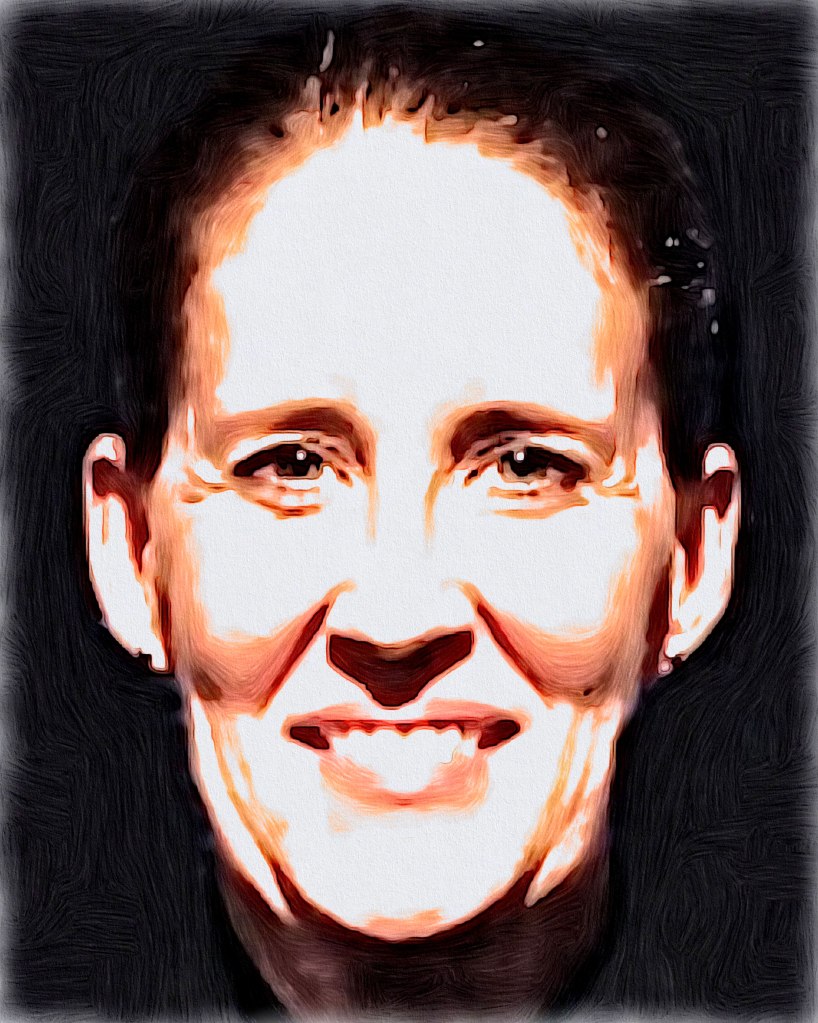
On a brisk early morning in January 2012, I met sergeant Gannon, a tall, skeletal redhead and her shorter partner, sergeant Johnson Fong—both looking weathered in the face. Gannon, 48 at the time, had started with the department in 1990 as a dispatcher, becoming a sworn officer in 1995. To my knowledge, she was single and childless, a runner and avid dog lover. Fong, 46, had started as an officer with the department in 1989 and was married to fellow SJPD sergeant Erin Lane. I would later learn Gannon and officer Okuma were Facebook friends.
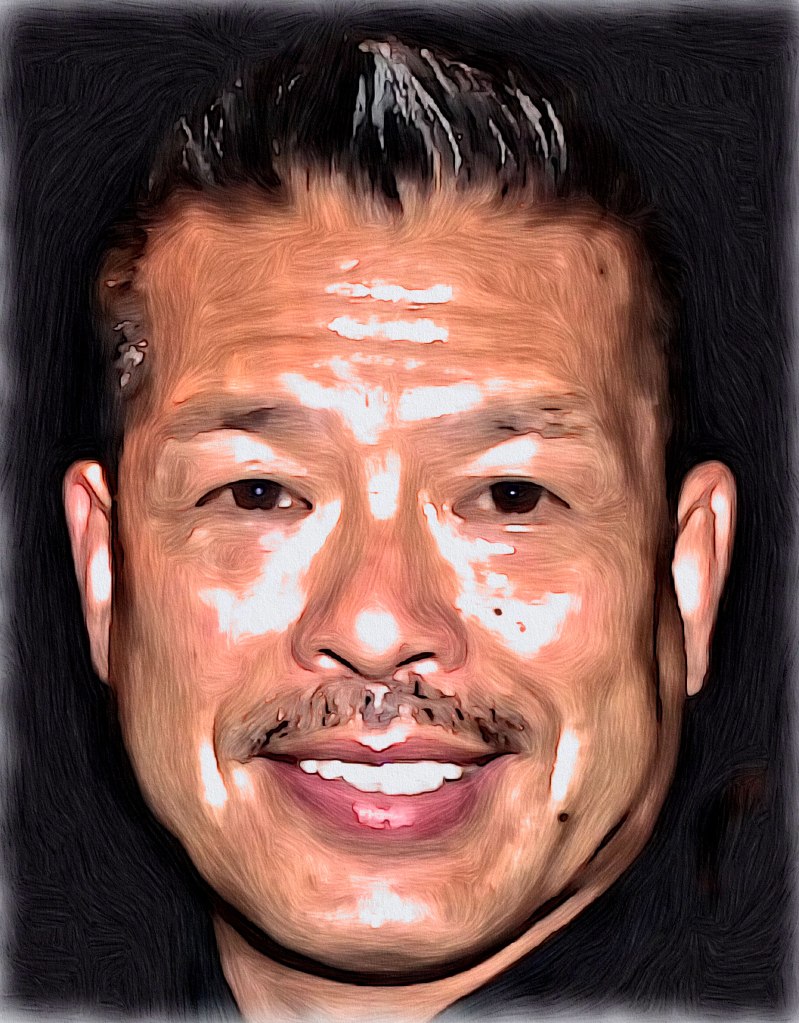
Upon my arrival, Gannon ripped my phone out of my hand and escorted me to the bathroom. From there, I was taken to a different floor where both officers scrambled for a meeting room. We ended up in a small room festooned with toys and a two-way mirror, I wondered who was on the other side. My rapist?
Gannon took the bag containing my DNA-stained dress, strategically placing it behind her chair. Fong darted towards me with a Q-tip, scraping the insides of my mouth. From the top of a seven-story building, I could see the branches of a pine tree and the gray sky just past Gannon’s head. It became my safe spot. I think about it every time I drive past that tree. For the next four hours, I was interrogated. Gannon played bad cop while Fong attempted to play the silent good cop.
At times, the interview likened to bad community theater, where Fong and a woman in a man’s uniform portrayed Stupid One and Stupid Two—the realization these two were in charge being the most disparaging part. NOT AN ADULT IN THE ROOM. “You’re too angry/You’re not angry enough”. “Why are you crying?” I told him NO! Gannon: “but why didn’t you scream/why did you allow yourself to be alone in a room with [a cop]”. It’s insulting being questioned by someone whom you can hear in her words had never been sexually violated, or who let alone, lacks respect for the violating act.
My perpetrator said I was dressed inappropriately; Gannon wanted a picture of me in that dress.
I could see how much she wanted to beat a recant out of me. I wanted her to know how much I realized after the assault that reporting wasn’t an option. I tried to convince myself for weeks that the assault was healthy, that it toughened me up. I washed the dress. I visited my perpetrator and tried to convince him of mercy, that I wouldn’t report him—that I was still his ally, even bribing the fat man with his cheap treats to avoid his ire.
Police reports would later reveal he’d begun his plan to discredit me from the moment I left the scene of the rape, starting with the middle school secretary. Due to my preceding reaction, I didn’t pass his TEST. The six-foot tall, 250-pound cop’s imputations would put a target on five-foot-three me. He knew he’d raped me before I did. I now think he always knew he would.
As much as I tried to convince myself different, my body knew something had happened. Panic attacks commenced, I grew increasingly anxious and had trouble sleeping. I started drinking hard liquor when I hadn’t before—something was wrong, and your bodies’ telling you it’s time to scream.
“Be honest…didn’t you like it?”
“Why are you getting sooooooo angry?”
The fact I said NO multiple times didn’t faze Gannon, she was a proponent of my rapist—she was my rapist—to the best of her ability, perhaps seeing me as the representation of women that make it harder for her to assimilate into her own profession. Neither Gannon or Fong had ever worked in a Sexual Assault Unit of the department, and it was quite apparent neither had personal experience with sexual misconduct.
I told them I was a journalism student, they both gave each other non-verbal glances, one of many. When the interview was over, both sergeants handed me a letter from my rapist. In which he pretended that I was pining for him, using the very words I said to him before the assault. Damn them both!
According to a 2019 Dallas Morning News article, Why are we so bad at prosecuting sexual assault, “when investigators aren’t trained in trauma-informed practices, they might use interrogation tactics on victims, which only makes the process more traumatizing”. And it did.
Managing my way down five flights of stairs—the crash didn’t hit me until I sat in my car, realizing my first class had been missed. I was in a mental tunnel by the time I got to the San Jose State University campus and after my first phone call, I was walking while in tears. I found the professor for my missed class, and through sobs, pleaded with her not to drop me because I had just reported a cop for rape. I called a friend in Florida as I waited for my next class to start—I could not stop crying. I wandered into a pink building as the call continued, collapsing at the top of a staircase. I was in complete fear and panic and cried like my body was purging. My friend had to hang up and I sat crying.
A woman with wavy red hair came out of nowhere and gathered me off the steps. With her hands on my shoulders, she walked me into an office I’d never seen, telling a woman behind a desk I needed help. The next woman grabbed me and rushed me into a small room with multicolored walls, a couch, a desk, and a chair—and another woman ready to listen. This was my first time in therapy.
I spent two years in on-campus therapy and counseling under the care of the university psychologist, Dr. Lo—three different counselors (and two sexual assault support groups through YWCA). My first counselor, Amanda, being the rock I needed through restraining order hearings where my perpetrator put on a show of intimidation (he brought a date to the first hearing, whom someone said they heard had charged him by the hour). I would schedule therapy after court dates, with one day feeling particularly suicidal as I walked from the courthouse to my session. It was raining and I told her I just wanted to walk into traffic. I didn’t choose to be raped. I didn’t want this to happen.
I was STD tested and put on an anxiety medication that initially zombified me. I’d totaled a car and would have moments in deep deep thoughts. The first year consisted of annoying crying spells where I’d sit in my car and spill everything to a rape or suicide crisis hotline.
You Should Be Sad by Halsey cultivates my existing struggle with the situationship my perpetrator and I existed within. With the psychiatrist, I discussed the struggle of reconciling the man I knew versus the man who attacked me—the protective glass separating me from the zoo animal was never there. I was told to separate him into Perp A and Perp B. But as I wonder through Disney today, my Mickey ears wonder if Perp A ever existed. Things like this can make you go crazy. I’m a journalist and I will continue my book writing the facts, we don’t have to know the why to move forward.
So what happened to my perpetrator? After temporarily being removed from duty and a rumored department hearing, he received sustainments for wearing another officer’s uniform, conducting police pay jobs without a permit or reporting the hours worked, giving false information in a police report and during a criminal interview, and since he claimed to not be armed during the sexual assault, he was reprimanded for that. The sexual assault was relegated to sex on duty, in other words CONSENT—which according to the California Law Review: Police Sexual Violence, this is a common tactic police departments use when an officer is faced with rape allegations.
Staying faithful to statistics, the Santa Clara District Attorney’s office declined to bring charges against my perpetrator, and in addition, has refused to discuss the case, sequestering it from legal view. The Santa Clara District Attorney’s office has continued to use my perpetrator as a witness, despite his reprimand for giving false information.
September 2013, just under two years after my assault, Geoffrey Graves, a six-year officer, would be accused of raping a woman he was tasked with escorting to a hotel after being dispatched to a domestic violence call regarding the victim and her partner. Graves, who later claimed the Spanish speaking victim was coming onto him, had reportedly returned to the hotel room, and raped her. The victim reported the assault a month later in a similar fashion to mine, during a traffic stop.
Graves was fired by the San Jose Police and charged with forcible rape by the district attorney. Despite this, he’s maintained friends on the department like fellow officer Michael Ceballos who claimed he and Graves had been long time friends. Graves was tried in 2016 and again in 2018 after an initial hung trial, only to be acquitted. Due to the commentary of the hold out jurors, it was evident that desensitization to sexual assault secured Graves’ freedom. For these jurors, they maintained deranged hope that even someone who looked like Graves could attain kinky random sex from a domestic violence victim—but believing women was just a bridge too far.
During the 2013 annual presentation of the Independent Police Auditors report to San Jose’s City Counsel, I sat silently as I listened to LaDoris Cordell, and then department chief, Larry Esquivel discuss my case, and others. When pressed, I watched Chief Esquivel demote the misconduct, declaring discontent for being told how to police his own department.
Christopher Moore, who served as SJPD chief during my sexual assault, led the revolving door of culpable leads over the course of time. Chief Esquivel oversaw my perpetrator’s return to the department and the initial harassment—retiring in 2016 to take a second income as chief with the Tracy, California Police Department where he was fired in 2018. Chief Eddie Garcia served during the remainder of my harassment where I was permitted to be targeted, till the end of 2020.
It didn’t matter that I had tried to stay silent or pursue a cease fire, despite being raped, the following years would require me to lay down and take more. No one was coming to save me as the retaliation from officers became frequent and pernicious. Though I paused my research into the department, I continued researching calls, which led to more retaliation. I suddenly began being pulled over, officers were approaching me, following me, driving past my home and intimidating me. My car had been broken into twice and my electronic property had been seized for destruction my senior year.

Under Garcia, an edict in the form of a BOL was put on my head department wide, giving officers free range to initiate contact with me, which officers like rookies Marco Mercado and Patrick Baldassari took joy in. My rapist’s supervisors also jumped at the opportunity—his former sergeant Amir Khalighi, known for harassing black and brown citizens, attempted a threatening encounter.
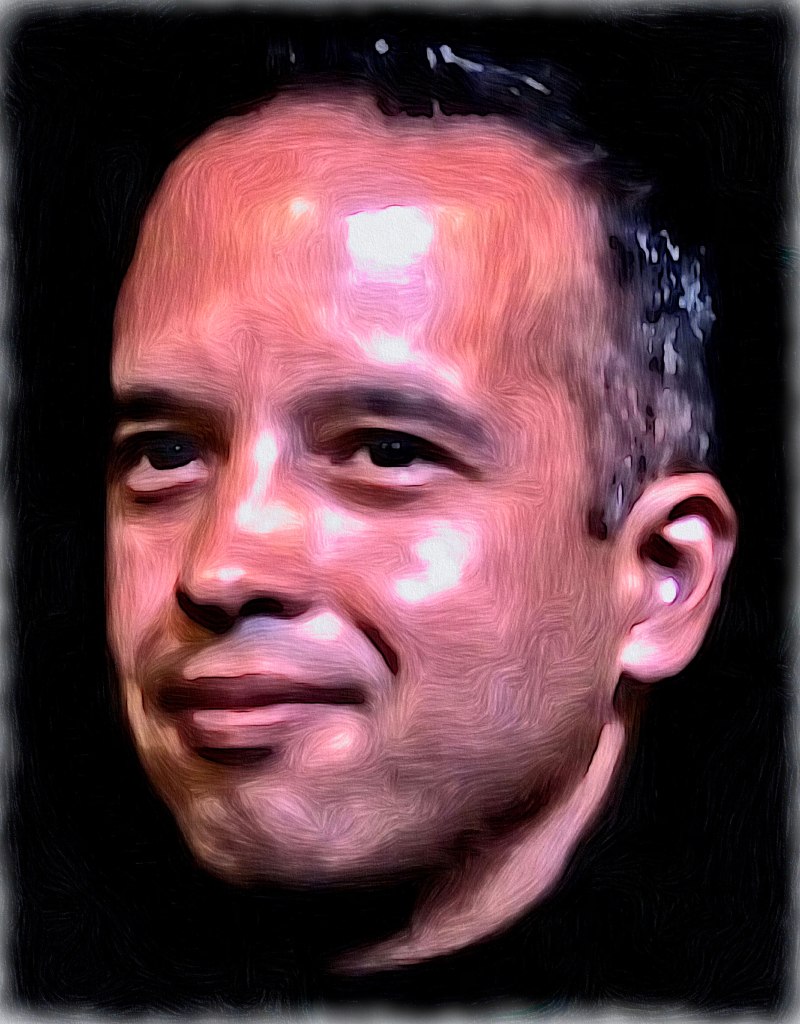
The worst retaliation came from sergeant, now Deputy Chief Jaime Jimenez. Jimenez, though average in stature, engaged in verbal and physical intimidation, accusing me of falsifying my assault. He stole a piece of jewelry I was gifted after the assault that has since been remade. When present during a questioning from another department about the assault, he attempted to keep me quiet from talking about.
Even Mata, who I encountered a year later at a community meeting, couldn’t help but snarl at my sight. As the list of officers grew, I expanded my research into police behavior [See my previous article Notes on a Story]. Derision, harassment, and dirty looks continued from officers like Eric Bucholz, Amanda Estantino, Matt Croucher, Lyle Jackson and Paul Joseph—as well as former officers Capt. Greg Lombardo, Jonathan Koenig, Sgt. Greg Connolly, Lt. James Ford, Tim Jackson and Robert Payne.
However malleable or juvenile they may be, sexual assault remains a police locker room punch line, and to them, I’d crossed a line reporting a cop.
Biting the Bullet
Trauma, I’ve been advised, is like a weight: the more you flex it, the stronger you’ll get. On the day of the sexual assault, I was parting ways with perpetrator. I told him a couple of weeks before that the end was near, and I thought he was going to be fine about it—but his reaction was different. I told him I wanted to thank him for providing access to other officers and for being so frank with me in our interviews, but that I needed to move on to other officers and that my focus would be on police calls once the semester started.
When he showed discontent about the decision, I invited him out, off duty. He asked what would happen if he fell in love with me. I laughed and told him that he wasn’t relationship material, but if he wanted to keep in touch, I would appreciate a source. He hesitated for a time, before telling me that he needed to be able to trust me. That he needed to be able to do something illegal in front of me and not worry about me talking about it. But he said I had a big mouth.
I’m journalist! This was always just a story. In another lifetime and another universe—before the rape—and minus all his toxic quality, things could have been different between us. I’m not someone who could be married to a cop—I can’t cater to police misconduct. I didn’t want to be around the sewer rats anymore.
It was sometime after this moment that the sexual assault occurred. The test!

And what would have happened had I passed his test? What would that have looked like? Did his wife have to pass that test? Would Deputy Chief Jaime Jimenez or Chief Mata have passed it? How does one pass the test of rape? That’s an unpassable test.
My perpetrator wasn’t a good guy. From the day I met him, I watched certain officers slide to the other side of the room when he entered—but on the surface he was convivial and funny. You wanted to scratch his surface but nothing deeper. He was frank about a lot, but omitted some troubling details.
When I met him, he was the day shift wagon so he wouldn’t be dispatched to calls, but out of hatred for the big blue transport van, he’d check out a reserve vehicle not assigned to certain policing districts. Said he worked days so he could be with his father when his holiday birthday came around. Hadn’t pulled over someone in three years because he didn’t want to find himself in court on his days off. He’d leisure around his shift, sneaking into the security office at a now defunct Safeway in downtown San Jose for hardy midday naps. And then there were the sewer rats!
Three individuals by the names of Paola Sabida, Daniel Trevino (the son of a retired SJPD officer named Andy Trevino), and Willy Martinez—made up a gross of groupies who orbited my perpetrator. Each were given weekly ride alongs where they were provided police radios and allowed to play cop for a shift, sometimes even answering the radio as an officer. Unattractive and awkward, but when surrounded by the uniformed elite, they seemed to gain purpose. Willy, who my perpetrator called Helmet (while I called him Bobblehead), had an abnormally large head which could have been a birth defect. He loved my rapist and would often view me as a threat—but was willing to answer interview questions for me. He told me that he had been in a canceled police academy, and that he and my perp met when my perpetrator was sleeping with his sister. I think my perpetrator had some unconventional feelings for Bobblehead too but didn’t disclose much about their relationship.
Technically, they may have been considered badge bunnies, to which I do not know the extent of the services they provided to these officers—but in my notes, they were The Sewer Rats. They all had multiple social media connections with several cops on the department. Sabida looked like mutant toad, while Daniel looked like a mild manner mouse. They were all granted unofficial access to the department. I hated the sewer rats, and while I was tipped off to illegal activity occurring, my interviews with my future perpetrator were concluding, and so was my time in proximity of the sewer rats. The ignoring of illegal activity is the part I have trouble living with about that period.
Out of the questions posed to my attacker, nothing is left unanswered, but I still ask why did this happen? In place of that answer, interposed is years of therapy and the regurgitation of the facts—the time, the place, his department, and the rape—and if he may possibly do this to someone else. And in perjuring himself, I will never be able to question the fabulist again—for he is now an unreliable source.
A few years after the assault, I resumed investigating my perpetrator along with the rest of the 135 officers in my sample group and discovered he became a dad a couple of months before we met, despite his claims of having no children. In his own words, he’d “f**ked up and got a girl pregnant”. In her criminal file, the mother stated that they were engaged during my assault, and he married her while he was being investigated, the sewer rats in tow. He retired in 2016 after I’d discovered he had started a business that qualified as a department violation, he then left California soon after. My perpetrator and the Santa Clara County District Attorney’s office blame me for his early departure. To them and the SJPD, they contend they lost a good cop. What do you think?

Lisa Gannon and Johnson Fong were both eventually promoted to Lieutenant in 2013. Fong promoted to Captain in 2017 then retired in 2019, making an unsuccessful bid for Chief of Police for the San Jose State University Police Department. Gannon retired in 2020 and has left the state of California.
Until our recent encounter, I hadn’t thought much about my rapist, but he’ll be on my mind for a time as I rewrite the hardest section of my book. My panic attacks have resurfaced and I’m back in therapy for the time being—relegating him to the rest of this season’s ghouls and monsters. I wear a piece of jewelry with his name, and the name of another officer on it. It’s a reminder that I’ve survived some very scary people.
A noted recommendation to combat PSV is the hiring of more women in policing, and while women are not identified as prolific abusers, it will not curtail the abuse or the retaliation. I was harassed by Gannon when she promoted to beat duty as a lieutenant, in addition to other female officers like sergeants Karen Aten, Jodi Williams and Lieutenant Kendra Nunes, who gave aide to my perpetrator.
Organizations will purposely avoid addressing statistics specific to PSV due to their proximity and reliance on what they see as the bigger picture of non-police sexual assault. A local organization, Next Door Solutions to Domestic Violence, despite its name’s sake, also helps police departments to retaliate against victims. Sexual assault groups are avoiding the acknowledgment PSV entirely. There is still room for improvement in the sexual assault support community.
If you too have survived sexual assault, I hope you had access to the same great therapy I had. Your world isn’t ending, and you have not depreciated from the trauma. I’ve had police officers join in chorus with my rapist calling me a slut and decrying my audacity to come forward—but misogyny is one of the characteristics of policing.
If you’ve been raped by a cop, you have options, which includes contacting your local FBI branch. Retain a lawyer who specializes in PSV before you have any communication with internal affairs because when you hand over evidence, that is where it will die. Seek out organizations like the YWCA and other sexual assault support groups. And take comfort in the community of individuals reluctantly thwarted into this not so small coterie of survivors.
It’s okay to be angry. Today, perhaps I’ll scream into a conch.
Greetings from Key West.


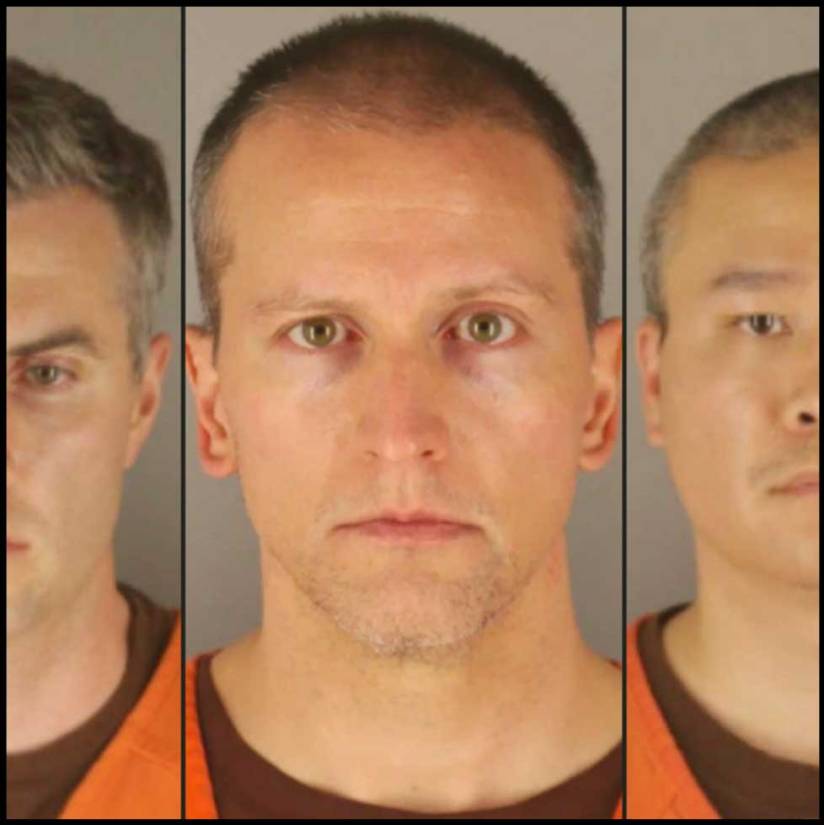










 The Little boys in Blue