Article 4: Notes on a Story

When it comes to policing, the devil is always in the details, and where the truth inevitably waits.

ON MAY 25th, San Jose, California became the setting of the 15th US mass shooting in 2021 where nine men were killed in the Valley Transit headquarters located in northern District Victor, after the shooter, Sam Cassidy, set his home ablaze in the central southern policing district of Lincoln. Mass shootings are quickly becoming the crop circles of our time—in which we wonder when and where—not if—and by whom they will occur. Within hours of the act, the FBI, ATF, and local police put a mic’d podium on the world’s stage—a concrete divider centered along a main street amongst the maelstrom, their suits certifying the dire moment.

lt. Jaime Jimenez

Then. A sexagenarian, blonde woman slowly creeped out amongst the forest of men, adjusted her sheriffs’ uniform (gold stars and all), and took over the grand stage. I turned off my computer. Nine people had died and I wanted to feel the moment, but to those in the know, bad cops become gnarly distractions to such tragedies, or such tragedies serve as timely mischaracterizations for bad cops.

The six-time elected sheriff of Santa Clara County, Laurie Smith, has been the center of campaign contributions controversies (in which the undersheriff and a captain have been indicted by the Santa Clara District Attorney, but Smith has not), alleged past sexual harassment allegations and under her watch, a mentally ill homeless man was beaten to death in 2015 by three deputies who are now serving fifteen years to life prison sentences each—in addition to behind the scenes shenanigans better saved for another article.
ofc. Sean Ancelet

She’s appeared on the Investigation Discovery Channel’s See No Evil and Web of Lies, where department heads are typically not interviewed to rehash investigations they did not conduct—the self-interposed Smith had sincerely become too much for me. A woman known to show one face to the world—and another to her department walls, I feared her public lack of humility would turn this moment farcical.

Smith is a Michigander from the Mitten, a republican, and after years of questionable transgressions—both morally and monetarily—she is yet again the focus of polemically laced calls by officials for her resignation over county jail conditions.

sgt. Ronald Bays

Ultimately, Smith’s failures are the fault of those who continue to vote her into power cycle after election cycle. Hers’ is a political position and as constituents, we don’t seek ethical leadership—come election time, we want to be “mind f*cked”.

After ten years of studying police behavior, I’ve learned to keep officers like Smith in perspective, necessary when in possession of a queasy stomach. While Smith is not an officer I’ve researched, she is evidence of the involuted and not so black and white makeup of law enforcement the country is now daring to simplify and solve. I’ve met a lot of bad cops. Nothing about police officers is straightforward or categorical.
ofc. Tim Jackson

I too once believed in the ataraxia inducing sales pitch of the ‘good cop/bad cop’ myth, growing up around a police department, the good cop was every cop I knew, but in hindsight, there were signs. Perhaps I had been too advantageous to realize that officers like Smith were complicated, therefore convoluting the profession.

The past year has been a looking glass into this uncategorical institution where we watched former Minneapolis police officer—and lynch by cop murder defendant—Derek Chauvin, meet an all too rare judgement where for centuries, white men had been acquitted by predominately white juries for similar crimes.
ofc. Joel Martinez

Even as George Floyd’s slow death played on loop, we learned how defensible cops were as Floyd was continuously (and still in social media today) put in the defendant’s chair—while Chauvin’s previous conduct, which includes, but is not limited to the beating and choking a teen boy—somehow seemed not so bad. The sympathizers of Chauvin and his gang of four highlight the realization, that to some in society, an officer’s crimes will always be deflected by the shiny badge—relying on a dire reality: look deep into their eyes and you’ll see the soul of every American cop.
sgt. Daniel Krauss

While weaponizing public trust is nothing novel for police, blunt double standards and the inability to envision or comprehend a higher quality of policing in this country has been our handicap. Floyd’s death moved the goal post to end the nucleus of police misconduct: qualified immunity—but the conservative parties’ involvement (who’s made Back the Blue a party trope) has made the remedy just about as cloudy as the problem. Who knew things would get complicated on January 6th?

ofc. Amanda Estantino

We saw an act of terror on the nation’s capital, as footage of uniformed police were seen beaten by crowds containing white supremacist, as well as current and former military and police such as Karol Chwiesiuk and Alan Hostetter, marching united under the MAGA umbrella—striking blows with polls fastened to blue lives flags. Outsiders were front seat for this unforeseen domestic squabble: Blue Lives mattered until right wing politicians perceived the actions of the capital police—defending the capitol against their mobbing constituents—as an act of (police) biting the hand that kept them feed. Yet the recent talks of police reform show republicans can’t relinquish dreams of a racially oppressive vestige—indemnity free policing from days gone past.

capt. Paul Joseph

On MSNBC’s The Beat with Ari Melber, Marq Claxton, who is the director for the Black Law Enforcement Alliance, had a disassembling thought on the phrase. “Blues lives are Smurfs. It’s never been about police lives or that blue rhetoric, and the blue wave really. It’s all about something other than respecting the law and order and sanctity of life, etc.” The former NYPD detective continued, “what this has been all about, and continues to be about, is a political movement trying to pull in as many of these so-called blue-collar workers—in spite of, and this is what amazes me about police—they tend to rally around these blue lines nonsense things, in spite of what we’re seeing here [the testimony of capitol police], where often times these same people who are promoters of everything blue, have turned their backs on you.”
ofc. Marco Mercado

Discombobulated yet? Police are without definition in a current time where some department heads seek to shed the very roots of white supremacy it once sprung from. They’re like the hive mind alien, Unity, from Rick and Morty or a profession filled subterraneously with those who read to many Judge Dredd comic books in their youth—but for now, there is no clear comprehension of policing amongst the malleable public and those whose vision and scrutiny derive from personal encounters or regular consumptions of COPS, Live PD and PAW Patrol as the litmus test for how things should have ended.  I get annoyed when people think it’s that simple.

ofc. Noel Gaytan

April 20th of this year marked the tense delivery of the Chauvin verdict and the police shooting of a 16-year-old girl in an Ohio suburb.

I imagined the protesters, war torn from a year of constant battle cries, grabbing signs from their closets. It was the first time the impulsive marching felt vacuous and risked devaluing the movement of justice without a review of the facts. Studying San Jose police calls made body camera footage immediately released to the country by the Columbus Police Department seem more quizzical, than anger provoking. My disdain was suspended by the question of what and why?
sgt. John Boren

What did the dispatcher tell the responding officers? Had there been prior contacts at this home or with the phone number 911 had been contacted from by Ma’Khia? What information had been relayed to the responding officers? Were officers told it was a group home? Based on the information—or lack thereof—should the officers have 87’d (aka: met) at a location a distance from the scene and strategized before engaging?
sgt. Justin Miller

Was the shooting officer, Nick Reardon, and his department members equipped with less lethals? And what of a subduing Taser? Would Bryant’s fast movements preceding the arrival of the first officer had prevented the prongs of the Taser from contacting her skin? What if her clothing had been too thick? Would the surge of adrenaline or possible undisclosed narcotics in her system prevent a fast enough effect of the Taser to stop her from stabbing the woman in pink? And at that point, how many punctures would Bryant had achieved? And why do we see a grown man kicking the first subject Bryant rushed to the ground.
lt. Greg Lombardo

Her sudden charging towards the officer and the two perceived victims provoked the officer to pick the life of one black woman over another. The shooting is now a part of a DOJ investigation.

This is a far cry from video released this past summer of Ronald Greene who was savagely beaten and murdered in 2019 by Louisiana State Troopers—ego bruised by a man who dare lead them on a chase probably dangerous enough to terminate. He was tased, beaten, choked and dragged face down across concrete by an officer who would later brag about the attack. Then delivered to a hospital handcuffed and dead, where medical staff had been told he’d died in a crash. The district attorney belying the facts of his death.

ofc. Eric Bucholz

What I would say to those who wish to see an amalgation of Bryant’s death with that of the murder of Greene is this: If you can’t instruct an officer how to better handle a situation, then you can’t instruct. And as much as some officers would like to be viewed as super human, they in fact are not.  They don’t host police academies at Hogwarts School of wizardry—no wave of some magic police baton can make for a petrificus totalus.

To be clear, sloppy policing by sloppy officers is what leads to the death or maiming of citizens lacking due process.

With that said, Ma’Khia Bryant was a child of the state who left the world judged by a system that had long failed her.
sgt. Tina Latendresse

The general consensus is to spend brain power and town hall discussions theologizing officers like those I’ve researched—those who braggadociously label themselves as Waste Management for the city of San Jose. As well as Derek Chauvin or the mistress of Santa Clara County herself, Sheriff Smith, and every other cop across this country—when perhaps police misconduct can be whittled down to a simpler reality: bad people treat people badly.

Blue walls. The Force. All terminology I’ve grown to hate, but if the blue wall is your cup tea, then let me introduce you to some of the bricks.

Misconduct: The Jon Koenig Way
ofc. Edgar Nava

Leveraging power over of others (and sparsely unchecked thanks to qualified immunity) by way of a superior authority can appeal to those unable to achieve such validity in a normal life—as so I’ve learned, can be the dangerous sell of a career in law enforcement.

Researching a police department—unfiltered—is like entering the jungle where humanity is altered—hunting, mating and socializing tactics feel transmuted due to conditions of the “brotherhood”, where officer conduct is typically contrived, banal and non-divergent out of survival amongst their fellow blue.  I’ve spent time with officers who’ve made my skin crawl, and a small few who were genuinely good guys—but I certainly left a little bit of myself behind while covering this story. Importuned and determined to finish a cultured journalism degree—I was educated on police statistics instead of stereotypes, an overview on what domestic violence is when your partner is a cop and sexual assault culture—eventually making me the target of threats from the San Jose Police.

ofc. James Gonzales

These words are anxiety laced as I now understand the blue wall and mortar holding it impenetrable. But here are the facts:

My research into police calls began in July 2009, and concluded on schedule in December 2019 just as the first officer who kicked off this story, sergeant Lyle Jackson, who was 13 years into his tenor with the department when he first approached me—was concluding his career with the department.

ofc. Patrick Baldassari

I knew from my first outing with Jackson, that there was a story. It is impossible to report on every officer and every department in the country, so I chose the statistically route. A sample group of officers then grew out of whom ever wandered out of the woods and into the circumstances, throwing his badge into the pot—and with every addition the story branched further. It’s been a cathartic racing of the clock as I am legally tied to SJPD for 2 more years and 10 months, Dua Lipa’s We’re Good playing as I send each chapter out for edit. As a journalist, the biggest lesson I’ve learned out of this is to trust the process. It is through officers like Jonathan Koenig, one of six officers being profiled, that I became educated on how bad cops not only thrive, but survive in US police departments. I was a neophyte penning a compendium love letter of sorts to the evils of law enforcement. And one pivotal rule of journalism is to know your subject.
sgt. Steven Guggiana

The sample group is composed of 135 San Jose Police Officers. However, two more SJPD officers were added in 2020, and another two were added back to the list after previously having been disqualified (Officer Blanky Cruz and Sandra Sandez, who’d perished from brain cancer in 2018, making her the only dead officer on the roster).

Thirty-one of the officers have retired and two have been fired. Fifteen left voluntarily—and of those, two have returned.  Eighteen are women. Sixty-six of the officers (including Alan Coker, Justin Horn, and Billy Wolf) are white or of European descent. Twenty (included officers Jonathan Koenig and Larry Situ) are Asian. Thirty-eight officers (including Mike Ceballos and Jose Martinez) are Hispanic. Eight officers (including sergeants Ray Vaughn Jr. and Lyle Jackson) are black. At least three are open members of LGBTQ+ community.
ofc. Mark Mabanag

At least nineteen officers have either shot someone or have been accused of excessive force. Two have been arrested (for neither of the previous offenses mentioned). Twelve come from previous departments. Three are former dispatchers. Eleven have confirmed military backgrounds. One is a former elementary school teacher while another 2 officers teach at local junior colleges. Twenty-nine have four-year degrees, while one has a juris doctorate. Five of the officers were known to me personally before the start of this story.

I’ve witnessed shocking things and have been impelled into acts I will never let happen again. I’ve actually been asked by a sergeant why I didn’t tell an officer NO!

sgt. Allan DeLa Cruz

The caveat is overtime, ‘Were not all that bad’ stops being thrown at you like a sitcom tagline once officers know you’ve seen too much—a blue curtain drops in its place.

Police continue to be a darker conundrum armed with artillery, monopolization of safety, and the weaponization of gaslighting. The devil you know. Publicly lauded as societies sanitation while void of dignification. Poster boy heroes with their fright night tactics, somehow fails to retain a classification other than necessary.

sgt. Lee Tassio

Four days a week, SJPD officers drive upwards of an hour to avoid, in plain clothes, the citizens they serve, protect, harass, and occasionally kill in uniform—to park their car in a lot and cross a two-lane road into a brick-and-mortar department, where for 10 hours a day, they can live an alternate existence from their normal daily lives—either for good or bad. I have plenty of battle scars from my time studying the department but as a journalist, it was never the plan for these marks of war to stay in my custody.

ofc. Marcello Oliveri

The lowest badge numbers in this study (at the time of this publication) started with the SJPD in 2013. Bad cops are leaving but statistically, plenty more are arriving to take their place. And while studying police behavior and habits won’t stop more imbibed into a profession fit for the outliers, it will help gain better protection from the entire herd, Sheriff Smith and those alike.

This article ends with officer Eddie Chan, badge #3735. A problem cop who joined my study in 2013. Whose buffoonery earlier this year landed him an internal affairs quarry and a spot on the eleven o’clock news in a video where, while swinging a police baton to a Mortal Kombat theme in his sergeants uniform, managed to degrade his embattled profession while simultaneously aggreging Asian stereotypes at a time of already elevated racial tension in the Asian community. This is an officer SJPD has worn the behavior of proudly. Chan will be covered in a future blog post.
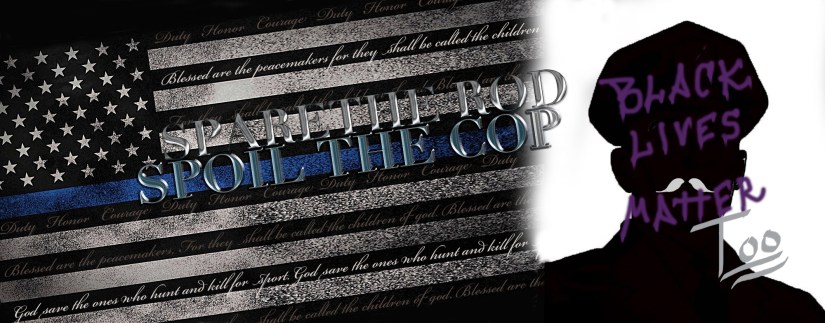
Article 2: Spare the Rod, Spoil the Cop

“When it comes to institutional or systemic racism, it’s there and it stays there because someone, somewhere, is benefiting from it.” -Prince Harry, The Duke of Sussex, per the Queen’s Common Wealth Trust
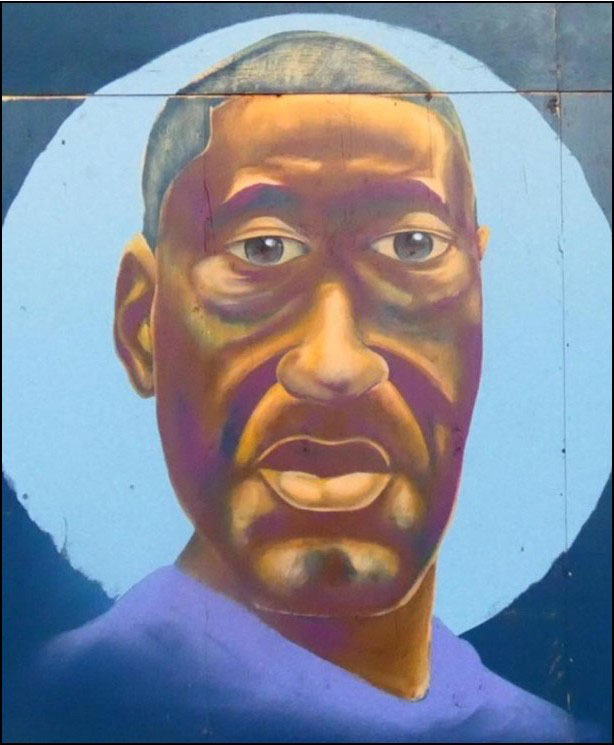
A mural featuring George Floyd temporally displayed in downtown San Jose, California.

Ten weeks ago, one of Breonna Taylor’s killers, Sergeant Jonathan Mattingly of the Louisville Metro Police Department, sat across from Michael Strahan on Good Morning America. The fraught and feeble—yet morally bankrupt cop suffering from little more than privilege managed to tell a murder story full of inconsistencies, befoul George Floyd’s memory, and when prompted—issued hope that Taylor’s mother will find a way to bare the consequence Taylor ultimately brought upon herself. In 10 minutes, despite being party to a sloppy and negligent police raid that ended the life of one and terrorized another, Mattingly managed to depict himself as the damsel.

Race had never been a factor to Mattingly who lives in a world different than you and me—where racial profiling is criminal profiling, murder isn’t really murder, rape is just cop sex, and illegal search warrants aren’t a desecration of one’s constitutional rights.

Go back seven months to the Friday afternoon of May 29th, where a scene—first seeded on the 101 freeway–soon settled on the normally uneventful grounds of the San Jose city hall, in middle California. A war zone pitting the San Jose Police METRO (SWAT) unit against incensed protestors. Profane shouts and water bottles crossed paths—midair—with amplified police commands and airborne cans of tear gas. Unlike our social justice neighbors to the north (Berkeley, Oakland, and San Francisco) this scene was uncommon. The burning of the lachrymator as it filled the air—then our eyes and lungs—of protestors, on-lookers and journalist, became as seditious as the modern day lynchings of our time. 2020 has become yet another milestone for racial inequality where the streets again speak for themselves—the same streets inspiring a 17-year-old white Trump supporter and cop enthusiast to pick a Milwaukee suburb as an ideal hunting ground.  Those aghast by the destruction, looting, and violence would be wise to consider: Would the level of anger & violence be so high if the bar for police conduct weren’t so low?

Earlier this year, a light—however dim, had been shone on the police. Stripped bare—the so called “blue lives” were paraded about the country’s town square while the Black Lives Matter movement trailed it with a ringing bell, shouting SHAME! SHAME! At least for a time.

The CATALYST: the peremptory homicide of George Perry Floyd Jr., a 46-year-old black man—strangled to death as four Minneapolis police officers circled him like a pack of wolves mid-lunch. One threatening anyone with the audacity to intervene…and the alpha male on his neck. Then came the shooting of Kenosha, Milwaukee’s Jacob Blake on August 23rd–by an officer with the fear capacity of 6-year-old girl (and a disregard for the concept of de-escalation) only furthered the disillusionment of the police race relations. Both scenes were a true testament to the founding function of our police. It brings us back to the days when officers blended in with smiling white onlookers while black men and women were captured and hung from trees like ornaments. The uniform worn by their attackers–makes them the byproduct of this lands racial epidemia, perhaps Floyd and Blake are the Strange Fruit Billie Holiday once sung of too.

Those unable to grasp the horrors of being black in the Jim Crow era, are insensible and unbothered by the residuum of it today. The decedents of the 1700’s slave patrols—those tasked with capturing, punishing, and re-implementing oppression on to those whom they felt lacked recognizable humanity—singled out, hunted, restrained, therefore robbing their detainees of control over their physical safety. The reintroduction to the origins of policing times itself congruently with our president’s introduction into the philosophy of 1960’s segregationist Governor George C. Wallace, this mystery era when America was supposedly at its greatest.

As a San Jose State University journalism student researching policing practices, I’ve seen the salivating eyes of officers relishing inconspicuous moments where they know their conduct will either go unnoticed or disbelieved. I too have been harassed and dehumanized. I too have felt the fear they impose, particularly when being black.

But before I’d conflated the race history of law enforcement with today, I find it interesting to note that my earliest police harassment often drew me to the convictions of Mary Turner—a young black woman who resided in Brooks County, Georgia in 1918–found herself decrying the lawlessness of whites and authority in her rural town when a tirade of lynchings had occurred in the search for a white farmer’s murderer. I understood her need to follow common sense over conformity despite knowing her voice would mean little more than a death sentence. One day after her husband had been one of 16 men falsely lynched for the crime, Turner was kidnapped and tied by her ankles to a tree to be set ablaze. A member of that mob took a knife to her pregnant stomach, cutting an 8-month fetus from her and stomping it to death when it fell to the ground before barraging her body with bullets. She was left hung from the tree to send a message.

Interacting with police forced me to explore my relationship with fear. Director Steve McQueen–a black brit, told the Hollywood Reporter in 2018 something of a mantra: “Sometimes you are constrained by fear. I always try to make fear my friend, because I know fears’ coming. I say ‘hey fear, how you doin’—therefore you just bring it on.”  Perhaps a sit down with tea may be the first step to confronting these blue boogeymen in dark corners.

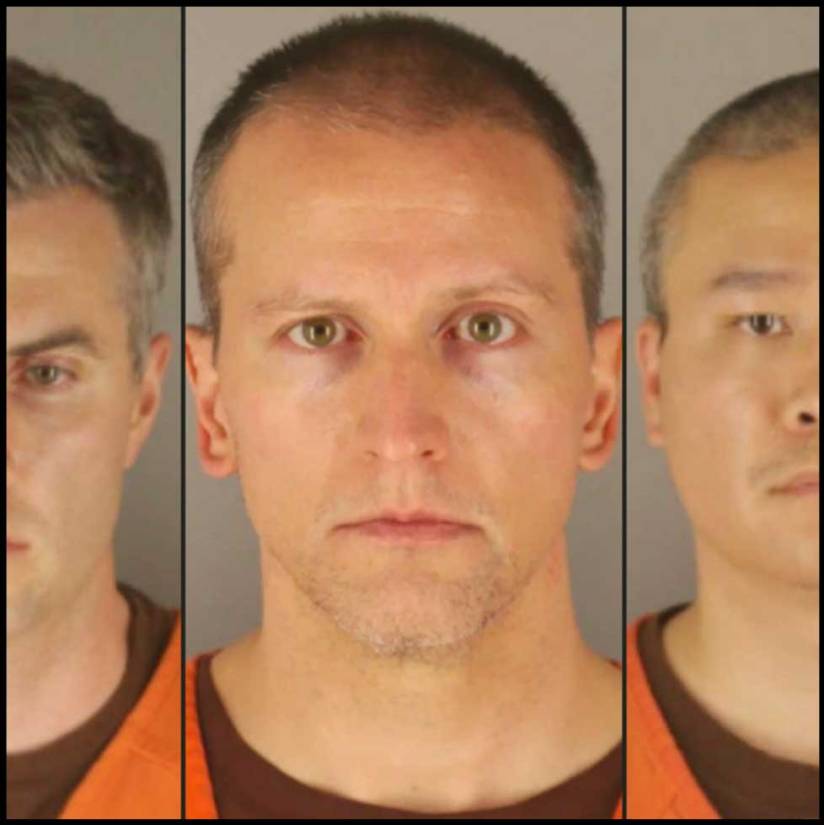
Floyd’s murder had sparked a chemical response from police institutions across state lines—initiating what I like to call Operation Gaslight. First, a well calculated move to temporally halt a retort of BLUE LIVES MATTER by cleverly utilizing the public spotlight. Rebuking the abhorrent conduct of officers Derek Chauvin and his three partners, officers Tou Thao, J. Alexander Kueng, and Thomas Lane, debulking them like a cancer from the institution. Some falling to a knee as they claim to be the 99%, the words BLACK Lives Matter pained through gritting teeth—while patiently waiting for Floyd’s death and subsequently inarguable anger to dissipate like a morning fog. But ingrained habits die hard.


Spare the Rod, Spoil the Cop (Part 2/4)

In June, New York Police Benevolent Association president, Mike O’Meara, stood before the press against a back drop of his fellow officers—and in his best rendition of the The Elephant Man’s ‘I am not an animal’ speechquerulously denounced the notion he and his colleagues should be seen as boogeymen to be feared. Footage began to emerge of faceless officers in riot gear assaulting press, peaceful protestors and the violent agitators shadowing them. Right wing pundits conveniently conflated the victims of black-on-black crime with police shootings, making wild deplorables the common denominator. And like sweet gas lighting preserves, officers were able to eclipse reality through voicing fear of violent retributions against them for “doing their jobs”—while a McIntosh Sheriff’s deputy broke down into the lens of her iPhone, debating the fate of her egg McMuffin in this social climate. A viral video better suited—perhaps, for the officers who actively soil her badge.

San Jose’s own chief Eddie Garcia had been confronted with an incident on May 29th in which a goading officer shot a life altering rubber bullet at peaceful protestor, inflicting internal damage. Garcia responded with disappointment but was quick to praise officer Jared Yuen as a “good kid”. I wondered if Garcia’s praise would have been so solicitous had one of his sons been at the receiving end of that rubber bullet, possibly rendering him unable to bare a grandchild. Garcia later apologized for the comment after backlash.

Perhaps it’s the inability to draw a line bolder and more defined than the established blue one—lest it not be the fault of police—but of those who empower and enable them to run unleashed. San Jose’s Mayor, Sam Liccardo, has drowned out his own proposals for procedural change of police with an unmerited and highly deceptive comment proclaiming most SJPD officers to be good. The former district attorney has clearly never had a frank chat with our city’s two former Police Auditors, LaDoris Cordell and Aaron Zisser—two individuals who have reviewed the most heinous of (and mostly unpunished) accusations against officers, including the supporting evidence. 

What I see in Liccardo can also be seen in those holding decisive position on police power, with common resistance to rock a boat of policing change into uncharted territory—the possibility of dire chaos. It will be the diligently naïve and intransigent public whose hesitation—or toe dipping—into a most perfect policing system—that will only encourage a more unethical chaos, breeding toxic cops. As a country, we are slow to needed progression. The conclusion of slavery (the very workforce this country was built on) wavered and contenged on the colonial fears of the disenfranchisement and financial upheaval it would cause to the lives of slave owners. Lincoln took a begrudged leap of common sense (among other things) towards progress and reform—and while results of that decision have not quite finalized, it has progressively materialized a better and more righteous union.

Despite the condemnation and distancing of ranking officers scrambling for damage control, they stop short of relinquishing the long-standing impunity officers enjoy. Perhaps it wasn’t the death of Floyd prompting a defiance of themselves, but the reaction his death garnered. Most of the officers I’ve spoken with over the past ten years would relate to Chauvin and Co.—and the decisive conduct inculcated with their profession’s high school-like peer pressure. They understand why not one officer intervened, but critical of Officer Thoa’s inability to intimidate on-lookers out of their first amendment right to spy. Why wasn’t one of the officers holding a digital blocker to prevent filming? And officer Chauvin—who killed in the light of day what a simple police flashlight could have blocked from cameras in the black of night.

By fall, it seemed the wave of change was no wave at all. Proponents of police and—more discretely—white supremacy, have, if anything, grown emboldened by the images of Floyd’s murder. Republican senators such as Josh Hawley (R-MO) and Tom Cotton (R-AR) walked away from the event with the opinion that police needed more power through legislation.

The Minneapolis Police union vowed to see the reinstatement of Floyd’s 3 remaining killers—before they too had been indicted alongside Chauvin.  Three Wilmington, North Carolina officers were fired after a recording captured the use of racist language and their desire for a race war. Three Aurora, Colorado officers photographed themselves mocking the murder of Elijah McClain at the sight of his death–so reminiscent of the days when hung black men were photographed and sold on post cards in the Deep South. And in a tribute to the nefarious lineage of racism running through the bloodline of policing—the New York City POA’s unsettling endorsement of notorious birther, Donald J. Trump.

Social media sites belonging to the family and friends of local officers went either silent or flagrantly indignant to the vitriolic public interrogations their loved ones faced.  Ignorance runs rampant within those close to officers, blind—and at times injudicious because the blood of the black and the disenfranchised stains different on a police uniform. Is it only in the criminality of a cop when his purpose is maintained?

It takes incredible audacity to wear membership to the murders of Botham Jean, Eric Garner, Michael Brown, Stephon Clark, Philando Castillo and Alton Sterling—or to the negligent handling of Freddie Gray, Sandra Bland, and Akai Gurley—only to then claim officers are the truly misunderstood victims of these crimes. A Modus Operandi magic trick eliciting sympathy from the public that they are far more oppressed than those they silence—through no amount of rationality but plenty of entitlement.

Lynching victim Will Brown in life, and in death, year 1919. (source nebraskastudies.org)

During her time, it was the likes of Jesse Washington (a mentally ill youth), Will Brown, Marie Thompson, Mark Charles Parker—and the 3,446 dead by 1968 for their melanin deformity—who compelled journalist Ida B. Wells to state in 1909: “This is the never-varying answer of lynchers and their apologist. All know that it is untrue. The cowardly lynchers revels in murder, then seeks to shield himself from public execration by claiming devotion to woman. But truth is mighty and the lynching record discloses the hypocrisy of the lyncher as well as his crime.” Simply replace “devotion to woman” with more modern claims such as “I thought he had a gun”, same shit—different century.

If only those typified within the words of Well’s had existed at a better time and place—a decade later, I say the same of the black and brown today.

While researching this piece I recalled the murder of Daniel Shaver, a white plumber from Granbury, Texas who the nation watched—through the lens of a body camera—beg for his life before being mercilessly obliterated by a Mesa, Texas cop in a hotel hallway. These are the things nightmares are made of—the parental fear President Obama (a black man) and Mayor Bill DeBlasio (the father of a black man) express out loud against criticism. These executions are the quiet part being spoken out loud—lauding distortedly depths of depravity as acts of bravery by sworn men.  Murder isn’t murder. Privilege isn’t bad. Injustice is justice. We are to revere officers as human beings yet we are coached to survive a police encounter by way of our local bear attack survival guide.

How many officers, standing in the wings gauge their invincibility against the biblical ‘shall nots’? Officer Philip Brailsford was acquitted of Shaver’s murder in 2017 and reinstated to his department. He has reportedly since retired.

The accurate intent of law enforcement is to be the resolute factor of a situation, not the incendiary of it. One is not supposed to determine the decisions of a cop and therefore should not be blamed for the escalation of their behavior. And until this is realized, one shall not be shamed for their fear of those who claim the image of hero but the disposition of monster. And a department’s bill of guilt shall not be paid by the tax paying public—but to be made clear, those irrational enough to think that taking a police officer’s life is an appropriate reply to police brutality will find themselves working against any logical, mature solution!

Bad cops make for the best criminal justice instructors, because when listened to with a sensible ear–they tell the truth. An officer’s firearm training–I once presumed–at best called for the temporary incapacitation of a life—which to that, in 2011, a senior San Jose police officer shook his head. “You wanna take out the computer”, he said—taping a finger to his temple.

Spare the Rod, Spoil the Cop (Part 3/4)

The REPUDIATION OF RACE: Modern day policing descended from the 1760’s initiation of the slave patrol—their fundamental function was to keep black slaves oppressed and in their place through apprehension, discipline and terrorization. To work on a slave patrol was considered a civic duty, much as policing is today. Slavery may have taken a bow to the 13th amendment, but remnants of the institution are still allowed to persevere. African Americans are still disproportionately targeted more so than other races.

Surely there is still an advantage to race supremacy in police culture. Much like the recent incidents in Minnesota and South Carolina, news surfaced in June by The Medium, (a watchdog group) of retired and current San Jose Police officers utilizing a Facebook page to air racist comments towards Muslims and Blacks, those they viewed as the noxious variety. California is among 14 states identified by the FBI where officers have been observed actively participating in white supremacy groups. A disconcerting sort of Blue Nationalism where those inclined are cops first—and husbands, daughters, parents—or any other societal member—thereafter.

In 2016, white officers represented nearly 72% of law enforcement (and in 2019, 43% of the San Jose police), and though their numbers are declining, they’re still the largest racial group represented in policing. While that percentage may have altered, policing is still a white, male sport—and perhaps even more so a state of mind. Chauvin was white —and without rank, but years of experience, he dominated the scene of Floyd’s murder. (If slave patrollers failed in the slave duties, they faced retribution, something to consider when judging the actions of the other three officers.) But do non-white officers, through indoctrination, develop white cop state of mind. Decades post the civil war, a minimal amount of blacks were permitted to join exclusively white police departments because they were thought to control blacks better, but were not readily allowed to arrest whites. Police departments of today may be the greatest connection to the heinous traditions of the Jim Crow era—and may be the reason so much of the privileged cheer them on.

DEFUNDING THE POLICE is a logical aspiration—meant not to be the first but final step of resounding change for all. In 2019, the city of San Jose made the better part of its annual public safety budget (45%) rain on the police department’s luxury brick and mortar. Most cities budgets pay a hefty hostage fee too but I remember hearing a rumor back 2008—during the national recession—that while the bureaucratic department members were taking pay cuts and furloughs, our police union had negotiated pay raises. The concept of taking one for the team doesn’t apply when you’re a cop. This situation would lead to a huge pension battle between the department and our then mayor, Chuck Reed. It looked like the most calculated revolt of all time. Eligible officers rushed to retirement while others took up offers at neighboring departments eager to pick up the scraps. Officers saw demotions, recruitment declined and there had even been an allegation claiming an officer instructed a class of recruits to apply someplace else after finishing the academy.

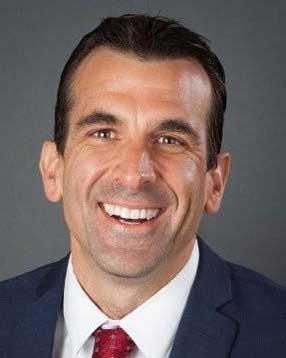
Mayor Sam Liccardo

Most importantly, morale declined. The attenuated department showed a decrease in response to calls, accenting their despair by mobilizing personalized RV campers in the department lots, claiming officers were so overworked, they used the convenience of an oversized, empty lot to sleep in their personal pricey RV’s. While pensions improved, salaries rose and city/department negotiations restored the quality of blue lives, the pricey mobile living facilities once meant to capture the attention of bleeding-heart citizens are still there.

But! I hear the reasons to defund and raise you some examples. In researching police calls conducted by the San Jose Police, calls involving a mentally ill subject became as cringe worthy as taking motor oil for a cold. On February 11, 2015, a distraught 23-year-old man choose the SJPD as his method of suicide, calling them to his home with the fabricated story of an intruder. It’s hard to contend that police can be more than a Jack Kavorkian invention to end life—despite CIT training, and I think law enforcement would agree, as long as the admission did not mean turning away extra government change.

Officer Wakana Okuma

I’ve watched San Jose Police Officer Chris Jolliff wrestle a clearly mentally ill, transient woman to the ground in handcuffs. I once called in a scene where a homeless man walked into a church and punched a man, unprovoked, sitting calmly next to him. Watching Officer David Sanchez (former SJPD) do what he was trained to do—as he pinned the disheveled, and clearly mentally ill man to the back of his car—felt sorely counterproductive. They needed help these officers were incapable of giving them—and death is not a remedy. Could a common-sense plan to reallocate funds by 2015 prevented Officer Wakana Okuma from shooting a bipolar 19-year-old wielding a painted drill in front of her father’s home? A number of these shooting end up in million-dollar settlements—monetary doses that could have served a prophylactic plan rather than an appraisal estimate on a person’s life. But even with recent changes implemented by departments across the country (San Jose included), the solution may continue to be a near miss—none of those dead should have met a cop that day.

AND THEN THERE’S THE KICKING AND SCREAMING. By law, cops can’t strike—but they can mobilize and delay, consequently monopolize public safety—a common practice synonymous with the Blue Flu, a concept very easily applied when the general public doesn’t know, understand, or care how you do your job. Delay of call response is a claim attributed to high call volume—and a low number of available officers. However, in San Jose, it’s never been uncommon to see too many officers at one incident, making some calls or debrief meetings look more like a holiday party. Call response for us is still an issue despite SJPD’s influx in hiring numbers. I recall one sunny afternoon, when a call went out over my radio while studying inside a coffee shop. One of the two officers dispatched (we’ll call him Officer Cano) sat feet away from me on the other side of glass. I watched him sip coffee for 18 minutes with a woman before he finally departed for the call. The reality is that delays happen because they’re permitted to, and it happens a lot, for both valid—and not so valid reasons.

San Jose is one of many corrupt police departments across the country—something I was warned about by a career journalist and those familiar with the department while attending university.  Now being able to confirm it, I’m left to ask: Is that a bad thing—particularly to those governing the department? I’m sure members of the POA and those flipping burgers over a grill at officer hosted bar-b-ques I once had the pleasure of attending as a youth would say no—perhaps preferring to give “corrupt” a more inoffensive label. Maybe “pride”—and self-perseverance, the selling points drawing recruits through the door.

Chris Jolliff and David Sanchez are two very different officers, who conducted themselves contrastively (I’ve observed both and interviewed one). To generalize the quality of both—only to list them in the default category of ‘good cops’, would be a degradation to one, by the other—especially when not keen to their entire histories. Outside of this moment of clarity, the analysis of all departments and all officers cannot be ubiquitous but the expectations of them can be—and still a uniform remedy is called for.

Spare the Rod, Spoil the Cop (4/4)

San Jose Police officers Eliseo Malvido and Jonathan Koenig during an arrest in July, 2015.

Among the SOLUTIONS?  If a national or local data base is implemented, this will just result in fewer sustained complaints being issued by internal affairs divisions—either out of fear for the reputation of the department or of the officer himself. The percentage of believed allegations against police officers are already disturbing low—2% of 887 allegations against SJPD were sustained in 2019, 5% of 770 in 2018, 10% of 697 in 2017—disturbing particularly if the public saw the level of evidence towards an officer’s guilt that is ignored. The disturbing part—in my opinion—is the cognizance officers have of their system. A department of officers will gossip about the latest cop to get a slap, and a group discussion of how better not to get caught and suffer a similar fate. Though sustainments are knowingly rare, no officer wants to be that cop that got sustained that year.

In San Jose, the Independent Police Auditor cannot override the final decision of Internal Affairs, though they claim they can run their disagreement to the mayor and the city manager (both of whom have no police experience) like quarreling children running to a teacher.

I’ve had an officer sustained and it is a bittersweet point of recognition in police misconduct. And what anyone from lawyers and judges, to community activist will tell you is that it is a ‘unicorn moment’ and unjustly rare. Reprimands are based on a preponderance of evidence (not beyond a reasonable doubt) and so much more. A sustainment has to be convenient, unavoidable, and uncostly to the department. As a city, we long for a community board void of political oversight and enough fire power to issue the stern judgement a conflict-ridden Internal Affairs cannot.  Where conflict of interest isn’t a factor in the review of an officer’s conduct.

IN CONCLUSION, we live in a country that has abolished slavery, struck down segregation, given women the right to vote and (reluctantly) the right to choose—we are a country as slow to embrace common sense as we are to progression.

The first step is acknowledgement that we don’t know the ratio of bad cops to good cops (I oppose categorical titles in policing but I’ll address that in another blog post). There are far more bad cops than the law enforcement community would grant you to believe (ahem-gaslighting). I have learned after ten years of research that when I encounter a new officer, I need to be cautious—but fair.

Accountability implies the existence of integrity, and is a word police need NOT be bothered with. The supreme court and law makers need to be bombarded with the term police liabilityand end Qualified Immunity. The medical industry has had its own ethical issues but doctors are held to the highest of standards and tend to make every professional decision as if their life depends on it—and it’s because their license most certainly does. The prestigiousness of the medical community is contingent on their ability to do a job few others are trained to accomplish. Nobody flies a flag for them when they leave instruments inside a body or argues that the bar for a doctor’s expectations should be lowered so we don’t discourage people from the profession. Doctors are praised for their ability to do a hard job right! So when it comes to police, a lowered bar will attract the less desirables (aka, liabilities). A place where departments— not tax payers—foot violation settlements. There is a world where police are capable of much more.

What I wish the public would do is educate themselves more about the actual practice of policing. I studied the SJPD for ten years because I loved the research, despite dealing with intimidation and some extremely dangerous officers. The police calls, the interviewing of officers, the explanation of the job through their eyes—all rare and enriching beyond reason. I appreciated learning how useless a criminal justice degree was or the proper procedure for off-duty officers to get out of traffic citations. Even when it came to the point of death threats from the department, it allowed me to see the true face of policing. I wish people would take the time to understand policing and understand it is not a field of nobility but of unprecedented moral turpitude—perhaps it takes a criminal to catch a criminal. I just wish this was admitted.

And lastly, bad cops are not the only problem. Judges, district attorneys, attorney generals (like Kentucky’s Daniel Cameron), the city attorneys who represent them, and unbothered city officials harbor in the back pockets of the police, ready to aid. It is the collective malfeasance that permits such misconduct, and if I had the ear of law enforcement, I’d urge those to embrace the retribution uproar as a road to constructive reform.

But in the process of doing this, one must realize the great injustice we impose upon police officers in our great nation. One never volunteers for discipline but cries out for it through conduct. The liability of police officers and departments needs to be higher. Too many allow ignorance to fill a void common sense leaves behind and those who know don’t want it to change—for the privilege of unlawfulness is too enticing. Limits need to set, laws of conduct established, consequences made clear, and an uncompromised ear needs to listen!

I would like to thank those who have risked their lives (the six-year-olds, the soccer moms, the college students, etc.), who lawfully protested and raised a voice this year in tribute to the unintentional Americans who lost theirs. From the slave ships, the nooses hung from fruit trees, to the Breanna Taylor’s and George Floyd’s. There will be more Strange Fruit to come.