Article 4: Notes on a Story

When it comes to policing, the devil is always in the details, and where the truth inevitably waits.

ON MAY 25th, San Jose, California became the setting of the 15th US mass shooting in 2021 where nine men were killed in the Valley Transit headquarters located in northern District Victor, after the shooter, Sam Cassidy, set his home ablaze in the central southern policing district of Lincoln. Mass shootings are quickly becoming the crop circles of our time—in which we wonder when and where—not if—and by whom they will occur. Within hours of the act, the FBI, ATF, and local police put a mic’d podium on the world’s stage—a concrete divider centered along a main street amongst the maelstrom, their suits certifying the dire moment.

lt. Jaime Jimenez

Then. A sexagenarian, blonde woman slowly creeped out amongst the forest of men, adjusted her sheriffs’ uniform (gold stars and all), and took over the grand stage. I turned off my computer. Nine people had died and I wanted to feel the moment, but to those in the know, bad cops become gnarly distractions to such tragedies, or such tragedies serve as timely mischaracterizations for bad cops.

The six-time elected sheriff of Santa Clara County, Laurie Smith, has been the center of campaign contributions controversies (in which the undersheriff and a captain have been indicted by the Santa Clara District Attorney, but Smith has not), alleged past sexual harassment allegations and under her watch, a mentally ill homeless man was beaten to death in 2015 by three deputies who are now serving fifteen years to life prison sentences each—in addition to behind the scenes shenanigans better saved for another article.
ofc. Sean Ancelet

She’s appeared on the Investigation Discovery Channel’s See No Evil and Web of Lies, where department heads are typically not interviewed to rehash investigations they did not conduct—the self-interposed Smith had sincerely become too much for me. A woman known to show one face to the world—and another to her department walls, I feared her public lack of humility would turn this moment farcical.

Smith is a Michigander from the Mitten, a republican, and after years of questionable transgressions—both morally and monetarily—she is yet again the focus of polemically laced calls by officials for her resignation over county jail conditions.

sgt. Ronald Bays

Ultimately, Smith’s failures are the fault of those who continue to vote her into power cycle after election cycle. Hers’ is a political position and as constituents, we don’t seek ethical leadership—come election time, we want to be “mind f*cked”.

After ten years of studying police behavior, I’ve learned to keep officers like Smith in perspective, necessary when in possession of a queasy stomach. While Smith is not an officer I’ve researched, she is evidence of the involuted and not so black and white makeup of law enforcement the country is now daring to simplify and solve. I’ve met a lot of bad cops. Nothing about police officers is straightforward or categorical.
ofc. Tim Jackson

I too once believed in the ataraxia inducing sales pitch of the ‘good cop/bad cop’ myth, growing up around a police department, the good cop was every cop I knew, but in hindsight, there were signs. Perhaps I had been too advantageous to realize that officers like Smith were complicated, therefore convoluting the profession.

The past year has been a looking glass into this uncategorical institution where we watched former Minneapolis police officer—and lynch by cop murder defendant—Derek Chauvin, meet an all too rare judgement where for centuries, white men had been acquitted by predominately white juries for similar crimes.
ofc. Joel Martinez

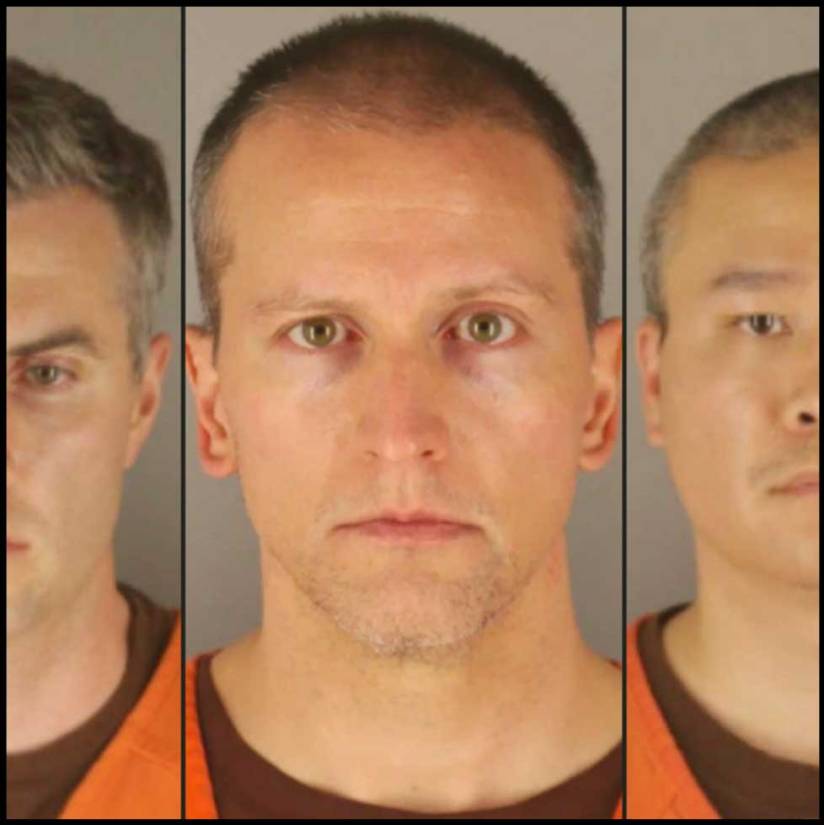
Even as George Floyd’s slow death played on loop, we learned how defensible cops were as Floyd was continuously (and still in social media today) put in the defendant’s chair—while Chauvin’s previous conduct, which includes, but is not limited to the beating and choking a teen boy—somehow seemed not so bad. The sympathizers of Chauvin and his gang of four highlight the realization, that to some in society, an officer’s crimes will always be deflected by the shiny badge—relying on a dire reality: look deep into their eyes and you’ll see the soul of every American cop.
sgt. Daniel Krauss

While weaponizing public trust is nothing novel for police, blunt double standards and the inability to envision or comprehend a higher quality of policing in this country has been our handicap. Floyd’s death moved the goal post to end the nucleus of police misconduct: qualified immunity—but the conservative parties’ involvement (who’s made Back the Blue a party trope) has made the remedy just about as cloudy as the problem. Who knew things would get complicated on January 6th?

ofc. Amanda Estantino

We saw an act of terror on the nation’s capital, as footage of uniformed police were seen beaten by crowds containing white supremacist, as well as current and former military and police such as Karol Chwiesiuk and Alan Hostetter, marching united under the MAGA umbrella—striking blows with polls fastened to blue lives flags. Outsiders were front seat for this unforeseen domestic squabble: Blue Lives mattered until right wing politicians perceived the actions of the capital police—defending the capitol against their mobbing constituents—as an act of (police) biting the hand that kept them feed. Yet the recent talks of police reform show republicans can’t relinquish dreams of a racially oppressive vestige—indemnity free policing from days gone past.

capt. Paul Joseph

On MSNBC’s The Beat with Ari Melber, Marq Claxton, who is the director for the Black Law Enforcement Alliance, had a disassembling thought on the phrase. “Blues lives are Smurfs. It’s never been about police lives or that blue rhetoric, and the blue wave really. It’s all about something other than respecting the law and order and sanctity of life, etc.” The former NYPD detective continued, “what this has been all about, and continues to be about, is a political movement trying to pull in as many of these so-called blue-collar workers—in spite of, and this is what amazes me about police—they tend to rally around these blue lines nonsense things, in spite of what we’re seeing here [the testimony of capitol police], where often times these same people who are promoters of everything blue, have turned their backs on you.”
ofc. Marco Mercado

Discombobulated yet? Police are without definition in a current time where some department heads seek to shed the very roots of white supremacy it once sprung from. They’re like the hive mind alien, Unity, from Rick and Morty or a profession filled subterraneously with those who read to many Judge Dredd comic books in their youth—but for now, there is no clear comprehension of policing amongst the malleable public and those whose vision and scrutiny derive from personal encounters or regular consumptions of COPS, Live PD and PAW Patrol as the litmus test for how things should have ended.  I get annoyed when people think it’s that simple.

ofc. Noel Gaytan

April 20th of this year marked the tense delivery of the Chauvin verdict and the police shooting of a 16-year-old girl in an Ohio suburb.

I imagined the protesters, war torn from a year of constant battle cries, grabbing signs from their closets. It was the first time the impulsive marching felt vacuous and risked devaluing the movement of justice without a review of the facts. Studying San Jose police calls made body camera footage immediately released to the country by the Columbus Police Department seem more quizzical, than anger provoking. My disdain was suspended by the question of what and why?
sgt. John Boren

What did the dispatcher tell the responding officers? Had there been prior contacts at this home or with the phone number 911 had been contacted from by Ma’Khia? What information had been relayed to the responding officers? Were officers told it was a group home? Based on the information—or lack thereof—should the officers have 87’d (aka: met) at a location a distance from the scene and strategized before engaging?
sgt. Justin Miller

Was the shooting officer, Nick Reardon, and his department members equipped with less lethals? And what of a subduing Taser? Would Bryant’s fast movements preceding the arrival of the first officer had prevented the prongs of the Taser from contacting her skin? What if her clothing had been too thick? Would the surge of adrenaline or possible undisclosed narcotics in her system prevent a fast enough effect of the Taser to stop her from stabbing the woman in pink? And at that point, how many punctures would Bryant had achieved? And why do we see a grown man kicking the first subject Bryant rushed to the ground.
lt. Greg Lombardo

Her sudden charging towards the officer and the two perceived victims provoked the officer to pick the life of one black woman over another. The shooting is now a part of a DOJ investigation.

This is a far cry from video released this past summer of Ronald Greene who was savagely beaten and murdered in 2019 by Louisiana State Troopers—ego bruised by a man who dare lead them on a chase probably dangerous enough to terminate. He was tased, beaten, choked and dragged face down across concrete by an officer who would later brag about the attack. Then delivered to a hospital handcuffed and dead, where medical staff had been told he’d died in a crash. The district attorney belying the facts of his death.

ofc. Eric Bucholz

What I would say to those who wish to see an amalgation of Bryant’s death with that of the murder of Greene is this: If you can’t instruct an officer how to better handle a situation, then you can’t instruct. And as much as some officers would like to be viewed as super human, they in fact are not.  They don’t host police academies at Hogwarts School of wizardry—no wave of some magic police baton can make for a petrificus totalus.

To be clear, sloppy policing by sloppy officers is what leads to the death or maiming of citizens lacking due process.

With that said, Ma’Khia Bryant was a child of the state who left the world judged by a system that had long failed her.
sgt. Tina Latendresse

The general consensus is to spend brain power and town hall discussions theologizing officers like those I’ve researched—those who braggadociously label themselves as Waste Management for the city of San Jose. As well as Derek Chauvin or the mistress of Santa Clara County herself, Sheriff Smith, and every other cop across this country—when perhaps police misconduct can be whittled down to a simpler reality: bad people treat people badly.

Blue walls. The Force. All terminology I’ve grown to hate, but if the blue wall is your cup tea, then let me introduce you to some of the bricks.

Misconduct: The Jon Koenig Way
ofc. Edgar Nava

Leveraging power over of others (and sparsely unchecked thanks to qualified immunity) by way of a superior authority can appeal to those unable to achieve such validity in a normal life—as so I’ve learned, can be the dangerous sell of a career in law enforcement.

Researching a police department—unfiltered—is like entering the jungle where humanity is altered—hunting, mating and socializing tactics feel transmuted due to conditions of the “brotherhood”, where officer conduct is typically contrived, banal and non-divergent out of survival amongst their fellow blue.  I’ve spent time with officers who’ve made my skin crawl, and a small few who were genuinely good guys—but I certainly left a little bit of myself behind while covering this story. Importuned and determined to finish a cultured journalism degree—I was educated on police statistics instead of stereotypes, an overview on what domestic violence is when your partner is a cop and sexual assault culture—eventually making me the target of threats from the San Jose Police.

ofc. James Gonzales

These words are anxiety laced as I now understand the blue wall and mortar holding it impenetrable. But here are the facts:

My research into police calls began in July 2009, and concluded on schedule in December 2019 just as the first officer who kicked off this story, sergeant Lyle Jackson, who was 13 years into his tenor with the department when he first approached me—was concluding his career with the department.

ofc. Patrick Baldassari

I knew from my first outing with Jackson, that there was a story. It is impossible to report on every officer and every department in the country, so I chose the statistically route. A sample group of officers then grew out of whom ever wandered out of the woods and into the circumstances, throwing his badge into the pot—and with every addition the story branched further. It’s been a cathartic racing of the clock as I am legally tied to SJPD for 2 more years and 10 months, Dua Lipa’s We’re Good playing as I send each chapter out for edit. As a journalist, the biggest lesson I’ve learned out of this is to trust the process. It is through officers like Jonathan Koenig, one of six officers being profiled, that I became educated on how bad cops not only thrive, but survive in US police departments. I was a neophyte penning a compendium love letter of sorts to the evils of law enforcement. And one pivotal rule of journalism is to know your subject.
sgt. Steven Guggiana

The sample group is composed of 135 San Jose Police Officers. However, two more SJPD officers were added in 2020, and another two were added back to the list after previously having been disqualified (Officer Blanky Cruz and Sandra Sandez, who’d perished from brain cancer in 2018, making her the only dead officer on the roster).

Thirty-one of the officers have retired and two have been fired. Fifteen left voluntarily—and of those, two have returned.  Eighteen are women. Sixty-six of the officers (including Alan Coker, Justin Horn, and Billy Wolf) are white or of European descent. Twenty (included officers Jonathan Koenig and Larry Situ) are Asian. Thirty-eight officers (including Mike Ceballos and Jose Martinez) are Hispanic. Eight officers (including sergeants Ray Vaughn Jr. and Lyle Jackson) are black. At least three are open members of LGBTQ+ community.
ofc. Mark Mabanag

At least nineteen officers have either shot someone or have been accused of excessive force. Two have been arrested (for neither of the previous offenses mentioned). Twelve come from previous departments. Three are former dispatchers. Eleven have confirmed military backgrounds. One is a former elementary school teacher while another 2 officers teach at local junior colleges. Twenty-nine have four-year degrees, while one has a juris doctorate. Five of the officers were known to me personally before the start of this story.

I’ve witnessed shocking things and have been impelled into acts I will never let happen again. I’ve actually been asked by a sergeant why I didn’t tell an officer NO!

sgt. Allan DeLa Cruz

The caveat is overtime, ‘Were not all that bad’ stops being thrown at you like a sitcom tagline once officers know you’ve seen too much—a blue curtain drops in its place.

Police continue to be a darker conundrum armed with artillery, monopolization of safety, and the weaponization of gaslighting. The devil you know. Publicly lauded as societies sanitation while void of dignification. Poster boy heroes with their fright night tactics, somehow fails to retain a classification other than necessary.

sgt. Lee Tassio

Four days a week, SJPD officers drive upwards of an hour to avoid, in plain clothes, the citizens they serve, protect, harass, and occasionally kill in uniform—to park their car in a lot and cross a two-lane road into a brick-and-mortar department, where for 10 hours a day, they can live an alternate existence from their normal daily lives—either for good or bad. I have plenty of battle scars from my time studying the department but as a journalist, it was never the plan for these marks of war to stay in my custody.

ofc. Marcello Oliveri

The lowest badge numbers in this study (at the time of this publication) started with the SJPD in 2013. Bad cops are leaving but statistically, plenty more are arriving to take their place. And while studying police behavior and habits won’t stop more imbibed into a profession fit for the outliers, it will help gain better protection from the entire herd, Sheriff Smith and those alike.

This article ends with officer Eddie Chan, badge #3735. A problem cop who joined my study in 2013. Whose buffoonery earlier this year landed him an internal affairs quarry and a spot on the eleven o’clock news in a video where, while swinging a police baton to a Mortal Kombat theme in his sergeants uniform, managed to degrade his embattled profession while simultaneously aggreging Asian stereotypes at a time of already elevated racial tension in the Asian community. This is an officer SJPD has worn the behavior of proudly. Chan will be covered in a future blog post.
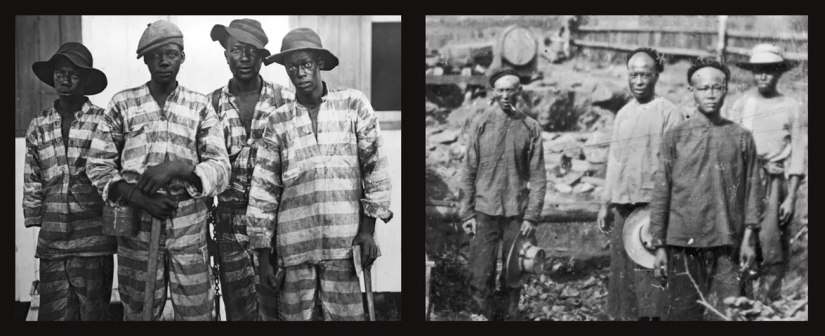
One of these Things is Not Like the Other

During two of the most crucial times in Asian and Black American history, the roads to equality may never have been more divided. (photo source: The New Topic, PBS)

There is no more of a direct way to start this piece except to say that violence against Asians needs to end.

I’m learning to listen as the Asian community grows more outspoken of its silent plight. An increasing amount of random racist attacks against some of the most vulnerable elders in the community has made me contemplate why this fight feels so familiar, yet…unique. I won’t pretend I know their struggle or that the uphill climb is one we as African Americans have already trekked.  A disproportionate number of blacks being hunted by police cultivated much of last year’s dialogue, but in the backdrop, the world was also learning about the expensive myth called the “yellow peril”—leading to the attacks and killings of those in our Asian communities. So much so that we are now recounting how many were struck with every “Kung Flu” or “Chinese Virus” epithets cavalierly uttered, in part, thanks to Donald Trump.

A total of 241 African Americans were shot by police in 2020—while the AAPI community reported a 149% increase in hate crimes. The racial plight of these two minority groups had not been conflated and it seemed obvious why. The day following the shooting spree that resulted in the death of eight people (including six Asian women), an Instagram commenter aired his frustration at the lack of a similar visible outcry matching that of George Floyd’s murder last year. Why weren’t people marching angrily in the streets, having deeper conversations on all medias, breaking windows and setting the world on fire?

My response: the active, slow or accelerated extermination of any group targeted for their nationality (or religion)—out of the stinging act of oppression is always horrible. But the experiences of the hate in the Asian community and of that in the black community is not one in the same. And I told the commenter—he shouldn’t want it to be. A common trope seen in the past weeks as actors like Olivia Munn and Daniel Day Kim addressed in interviews: this is the BLM movement for the Asian community. The Black Lives Matter movement and the AAPI movement are both fighting oppressive racism—but that’s about the point commonality stops.

During an interview with Monthanus Ratanapakdee, the daughter of Vicha Ratanapakdee—an 84-year-old Asian man who was randomly attacked in San Francisco—she and her husband, Eric Lawson, sat with Nightline to discuss his later passing from the injuries he sustained. My own feelings of sadness for her father’s experience were abruptly thwarted when Lawson—who did not appear to be Asian—looked at the camera and demanded that black people needed to talk to their own—because his father-in-law’s attacker had been black. And yes, that ignorant statement was offensive.

I’m an African American woman and I don’t associate with anyone who would commit any such violence towards anyone for any reason. There is not one black person in my vicinity that needs a talking too. And there came the epiphany: there is no one group the Asian community and its allies can decry. A pickle the Black Lives Matter movement does not quite face.

Police departments were the primary object of the 2020 BLM protest. A distinct history of the brutal oppression from the moment Africans were brought to America as slaves. Floyd’s murderers were all former cops which means they were formerly employed by an organization whose original function was to capture (and at times kill black slaves). As allies to the BLM movement, we spent the summer attempting to shake the white supremacy out of an institution who’s had racism running through its veins for nearly two centuries.

We needed higher regulations for police officers and politicians to be instinctually competent enough to see the conduct of policing—and to put themselves in the shoes of average citizens instead of fully armed officers who commonly claimed they killed because they “feared for their lives”. How infuriating would it be to hear the Atlanta shooter claim he shot those eight people because in the course of getting a massage, he thought the masseuse was reaching for a gun when she was reaching for lotion. And how angry would anyone feel if they knew his viable defense was “he feared for his life”.

I am somewhat aware of the relationship between the Asian community and police, but there is something far more nefarious and disunited cornering the Asian community. As addressed in an article by University of Colorado Boulder professor Jennifer Ho, titled White Supremacy is the root of all race-related violence in the US, this is a white supremacy issue—even when the violence is carried out by the black and the brown. You don’t have to be white in order to do something in the faith and name of white dominance.

It’s so easy to start comparing battle wounds of the respective cultures, but that involves attempts to downplay the hardship of one versus the other—and it’s not productive in this battle. The AAPI movement needs to be its own battle for equality that we fight together with the Asian community.

The anxiety felt by Asians, both in this country and Canada is palpable—not only being consumed by one’s own safety but of the safety of their loved ones. I too have grandparents whom I worry about the welfare of when I’m not with them—so I get the fear. I’ve also had to file a restraining order against an armed and active police officer, who had plenty of armed an active colleagues resolute in reminding me that if I scream, no one will believe me. Basically—I get the terror.

Mr. Lawson’s misguided request had actually been on my mind long before his families’ loss. 2020 had left me more discombobulated than ever regarding the lingering support for Trump. Not just for his failures in the handling of COVID and every other initiative bungled, but for his racial rhetoric—particularly in the rare moments I encountered a minority voter. Living in California, most of these encounters were left to social media where one day last fall, I found myself in a verbal tussle with an Asian Trump supporter. When asked why she would stand for a man who clearly thinks so little of her community that he’s willing to put a target on her back, her reply had been that Trump was not talking about her. When I decided to turn Trump’s rhetoric on her, her argument eventually rescinded. Perhaps Mr. Lawson should have a conversation with her.

Asians represented 31% of the Trump vote in November 2020 (and 12% of the black vote)—slightly higher and sans the virus vitriol in 2016. To some, this may have been an act of simulating rather than solidarity. Had Trump’s one attempt at squashing anti-Asian rhetoric not tested so poorly with his mostly white audiences, an emphatical and consistent stance to protect the Asian community from backlash could have saved those falling to the other race reckoning happening in our country. When a former QAnon supporter had been asked by CNN what would have steered her from falling down the disinformation rabbit hole, she replied that a staunch denouncement by Trump would have stopped her from following the platform.

Whether Trump should be the subject of a major lawsuit by the AAPI community or if we are just merely the long haulers of his four-year hate train, the Asian community deserves to know the root causes of these elevated hate crimes.

Every time a new attack is publicized, my first question (after the nature of the attack and the welfare of the victim) is why the person did it? It’s a loaded question but it concerns me that this isn’t questioned by the media (and possibly law enforcement) fast enough, and that advocates are not dwelling more on it—the identifiable pattern.

When two elderly people were attacked in March in downtown Oakland by a homeless male, these details were glossed over during an interview with the attacker’s public defender. He indicated his clients need for a psyche evaluation because the man appeared mentally ill. This was a secondary question to the reporters more pressing query of how the lawyer felt about representing the defendant when he, the lawyer, was in fact Asian.

Intrinsically, I always look for the existing pattern—but stop short of creating one when there may, in fact, be none. My frustration with every nonsensical attack is my commiseration with Mr. Lawson. There is no point to any of this. But just as actor Daniel Dae Kim retorted, it is clearly not just a singular race supremacy issue but mental and possible environmentally grown hate. I think the AAPI community is acting logically by proactively stepping up, and not stepping back, their fight. 

I don’t feel, see or believe that there is some profound sector of the black community that hates Asians but if we’ve learned anything from the demographics of Trump supporters, ignorance and racism comes in all sexes and from all origins. Still, it is incredibly hard to see these attacks manifest.

I live in the state most populated by the AAPI community and have certainly grown up in ear shot of racist utterances—but I’ve also grown up understanding the common sense of treating people as you wish to be treated. As I write this, fully vaccinated—I reflect on the singular incident in this past year when I’d received a vile reaction for sneezing in public. It was from an older Asian woman—who jerked away from me with a glare. I remember physically visiting an Asian professor of mine who swore people missed his class out of laziness to prove to him I had contracted laryngitis, causing him to scowl from me with an accusation that it might be Sars. A reminder, I’m African American!

It has been easiest to not have a categorical opinion of the Asian community, and that for me is the best resolve. I have dealt with racism and some of that has been from Asian individuals. I hadn’t realized how color blind I had been until it recently occurred to me while in the process of working on my first book. That while my rapist was not of Asian descent, every other incident of assault or sexual objectification I have been subject to has been by Asian (non-Indian) or bi-racial Asian men. The realization doesn’t draw me to hate or aggression—but cognizance. While I do not have Asian kin nor are any of my close friends Asian, I do work and live alongside great people, some of who are this targeted race.

It brings to thought that the issues are not cookie cutter but what is currently happening to the Asian community is out of bounds. An alarming amount of these attacks have been committed by black men and though astounding, I can relegate that these are individuals who do not grasp or see the hypocrisy in their racial intolerance rather it be out of mental instability or otherwise.

The Asian community has shown up tenfold for the Black Lives Matter movement, and the rest of the country should do the same in return. For myself—I will pledge to stay vocal when prejudice is in my vicinity during any act of hate. For we have faced similar acts of historical massacres, racially discriminative laws, and hate crimes without adjudication. So where will we march for the AAPI community? Who are we marching to? Are we screaming to the heavens?

While I look forward to the apprehension of every perpetrator committing hate crimes against Asians, the swift arrest and charges leaves me heart sick and fatigued for the road ahead of the black community. That homeless man who was arrested for attacking two elderly Asian people in Oakland will be prosecuted. Robert Aaron Long, the Atlanta shooter will never see the light of day again. While the AAPI community is calling for the recognition of hate crimes in these cases, we are crossing all extremities hoping a Minneapolis Police officer will see a prison cell for murdering a black man over a counterfeit twenty dollar bill. We don’t have time to protest the lack of a hate crime charge against Derek Chauvin, we were too busy protesting for him to be apprehended from his living room couch. This is the pickle of the situation dominating the lives of the black community—that we can stop seeing police officers get the treatment once afforded to the killers of Emmitt Till. This is why one thing is not like the other.

And just as with the recent killing of Daunte Wright, I think it is important that charges stay within the imperfect system of laws and prerequisites we require for such charges to be applied. I do fear that through this, some will be pushing a square hate crime peg into a first-degree murder hole if the required evidence isn’t there. This could prove to be a double-edged sword—in any case—and in any society where prosecutors follow public pressure, and not the law, to administer justice. Profound emotions of injustice should create more just laws, not pressure induced charges. 

Though I do believe Trump and his (in)ability to understand such complex tropes as the Kung Flu “Gina” virus will pass in the heap of Alt-right conservative history, he has certainly lent vocal freedom to those who harbored such closeted prejudice as if it has been a continuous four-year celebration of Festivus. A line from a skit of The Chappelle show called “Clayton Bigsby, The World’s only Black White Supremacist”, has echoed in my head from the beginning of Trump’s presidential campaign: “If you got hate in your heart, let it out”—a mocking dig at the core of white supremacy. Well Trump has certainly become an idol in the eyes of hate.

I pledge to do what I’ve always done during the commission of a crime, intervene and aid as I would hope others would do for me.

With that said, I wish the utmost safety and support to the Asian community worldwide. The AAPI community has the right to a reckoning all their own.

Article 1: Uncle Eddy

The last four chiefs of the San Jose Police Department: (left to right) Christopher Moore, Larry Esquivel, Eddie Garcia, and Robert Davis. (San Police Police)

2020 will probably be the year of hibernation as we “shelter-in-place” in our respective corners. Some are finding the fortitude to count what they still have control over, while others are using this time to regroup. My need to regroup has involved appreciating the silver linings in the stories of skies clearing over parts of the world, or that endangered turtles are multiplying. It’s been completing Truman Capote’s In Cold Blood, while shuffling through Dua Lipa tracks (Caution by The Killers has also been on loop). Lastly, regrouping has meant working on research for my first book, which somehow makes this whole Coronavirus feel like a pro and con.

Here’s a fact about me: I love horror films…have since I was kid. There’s something about watching a Zombie terrorizing a girl on a boat dock that makes you feel a little better about the scary things in your life. While recently binge-watching old episodes of Tales from the Crypt, I came across an episode that hit a little too close to home for me—it became a reminder that it was time to blog. (And please excuse the length of this one!)

Chief Robert Davis

The season two, episode twenty-one segment is titled Mute Witness to a Murder. As a sexual assault survivor, this episode hit a cord with me in the same way recent releases such as the film Invisible Man (2020) and the Fox News scandal biopic, Bombshell (2019) had. Actress Patricia Clarkson played a woman who witnesses a murder outside her home, in which the trauma renders her mute. Her husband proceeds to seek medical attention for her from a doctor who also happens to be the murderer. After convincing her husband that Clarkson is not sane or self-reliant, the doctor manages to isolate her in a padded room, rendering her helpless while terrorizing her in the subtlest of ways. He tells her she is in a place of restraint, in a sanitarium he is the director of, and that he is labeling her as a ‘dangerous psychotic’; and that he is doing this because she witnessed his crime. I’ve heard those type of words before. And it always puts me in a screaming panic.

But let me start from the beginning.

In August 2009, circumstances were laid into place for me to investigate the concept of social issues within law enforcement. I soon found myself with a subject police department, a small sample group of police officers from said department, and the opportunity to alter my beliefs on the concept of policing. This would be a boot camp of sorts, coinciding with the conclusion of my journalism degree, and subsequently becoming my degree emphasis.

Ten years ago, I never would have imagined blogging about the subject of policing or my experience with this department, nor did I think I’d have enough for a book. I had planned to produce a few articles and move on. This blog will serve as a companion to my research and reflective work (my book) on the San Jose Police department.

Chief Chris Moore

San Jose is the tenth largest city in the US with a population just spilling over a million as of 2019, but it’s known as a ‘connector’ city. Nobody plans a family trip to San Jose unless they have someone, or something, here to visit. Maybe you’re connecting a flight here or renting a car to drive to San Francisco, or Los Angeles, or Sacramento–because the flight was cheaper or the road trip seemed enticing. But no one comes here as their getaway. We sit in the fundament of Silicon Valley, an hour south of San Francisco and a country mile north of that famous Gilroy Garlic. Oprah once reported San Jose as the city with the most eligible bachelors. Those self-proclaimed nerds you knew in high school, they’re here now. Yet, I’ve always called this place home.

And our dept…

The San Jose Police department does not rank in the top ten of the largest law enforcement agencies in the country. Still, I like to call this complex, yet comprehensible group the medium size department, even though it’s number of sworn officers have averaged about 1,151 over the past ten years.

Chief Larry Esquivel

Part of my upbringing was with this department where one of my parents worked as a forensic scientist for 30 years. As a child, I remember getting school absent excuse letters from the office of the chief on ‘Take Your Daughter to Work’ day. Shooting my first gun in the department firing range. Having a customized caricature drawn by San Jose State University professor (and former SJPD officer) Gil Zamora– the department criminal sketch artist from 1995 to 2011. Finger printed for the first time in the third grade, and hitching rides with school liaison Officer Washington to the department when I couldn’t get picked up from school on time. Snacks from the aged department cafeteria and blueberry muffins from the former city hall building across the street.

Memories of walking through the department gym to the top of the communication building to watch fourth of July fireworks…I’d been to just about every corner of that department building without a clue that I would one day be investigating the officers in there.

What does the uniform represent now? It’s hard to look at police the same as I once did. Maturity…Prestige…Nobility…Principled. But I only wipe away the words I can now say I witnessed one, or more than a few officers, obliterate.

This would be a slow forming story, a ride I was in the back seat of as I watched officer after officer take the wheel. Turning me into neighborhoods of reality I had previously only assumed fictional, rare and reserved for the cinematic.

You start from the top and dig south

Former San Jose police chiefs Robert Davis, Christopher Moore, and Larry Esquivel were the heads of this enlarged, yet seemingly little-known department. While current chief (and header of this blog) Eddie Garcia closes out this story. All four governed the department during the duration of my documented research. I have varying thoughts about each one, particularly because the conduct of a department always wears the face of its leader. When I reflect on things I’ve seen and heard, it doesn’t matter who the officer was who said or did it, it was always co-signed by the chief.

Each chief had their unique qualities:

  • Robert Davis (2004-2010) was a practicing Mormon and during his time as chief, once fasted during Ramadan, showing solidarity with the local Muslim community.
  • Chris Moore (2010-2012) was a former fire fighter and an active member of the California State Bar, not to mention highly educated.
  • Larry Esquivel (2012-2016), whose name I’ve grown determined to remember the correct spelling of, was a teen dad. All four officers started as beat cops with this department and worked their way up.

And Chief Eddie Garcia… he’s an officer I’m still getting know, and his depiction is already making sense to me:

Chief Eddie Garcia

Easier on the eyes than his predecessors, the Puerto Rican native, and former militant is the “jocular” cop with an athletic build and the simper of a used car salesmen. Not just a car salesman, but a used car salesman. For he has mandated the dreamed, cleaned department. Famous for his ingratiating, heroic one-liners–accredited for making the man behind aviator shades the sweetheart of the local press. The neighborhood Ice Cream Man rose the rainbow flag before the department headquarters that once harbored in shadows a transgendered officer over a decade ago. Even acting as a hood ornament on a police cruiser as it drove through the San Jose gay pride parade. Taking underprivileged kids toy shopping, Boba tea with citizen—I’m still waiting for the Afternoon Tea Party & Ladies’ Luncheon with the chief (tea hat and lacy white gloves required).

While his “man of people” one-liners happily wade in the waters of public judgement, it’s his efficacious, yet deceptively menacing selling point that an appeased, prioritized department, equals a happy, protected public– a rhetoric that floats effortlessly and without scrutiny. An underlying mindset seemingly supremacist in its most virile form as it echoes from department to department across our vast country. So, finger to lips.

What would I say about Uncle Eddie? Or Uncle Eddy? Chief Eddie Garcia is someone I’ve seen through the eyes of local media and in the flesh. A brief encounter at the closing of a town hall meeting where he flashed a congenial smiling to a group of us, thanking our attendance.  Within department walls, I’ve heard he’s an a**hole…but I take that with a grain of salt.  Stopping short of the bravery and boldness once exemplified by the departments most well-know and well revered chief, Joseph McNarmara, Garcia gives way to the cool boy adoration of his rank and file. But what would Uncle Eddy tell someone in a moment of full disclosure. What would a sectional in the department disclose or bring illumination to?  What happens in dark corners?

Vague claims are often made about the stature of law enforcement, and on the broadest of terms. This is something I’ve always been cognizant of—and if we are fortunate to see our closest source of law enforcement through rose colored glasses, we tend to assume the good is true, and bad images are just misinformation.  That pesky “one in the ninety-nine”. I grew up this way.

While the explanation of this blog’s title is simple, it spoke to me and the way I once felt about the officers I knew and my ignoramus in the endearment and integrity I once thought was implied with the uniform. A year in a half ago, I was following a lead related to an officer in this story. On the social media page of the daughter of another officer, an old post remained, its innocence stuck with me. A photo of both men in uniform receiving an accolade with a caption attached: “Congratulations to my daddy…and my Uncle Eddy”.

Till next time.