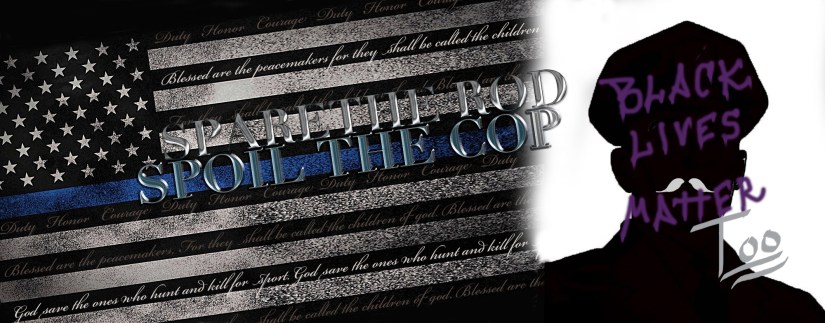
Article 2: Spare the Rod, Spoil the Cop

“When it comes to institutional or systemic racism, it’s there and it stays there because someone, somewhere, is benefiting from it.” -Prince Harry, The Duke of Sussex, per the Queen’s Common Wealth Trust
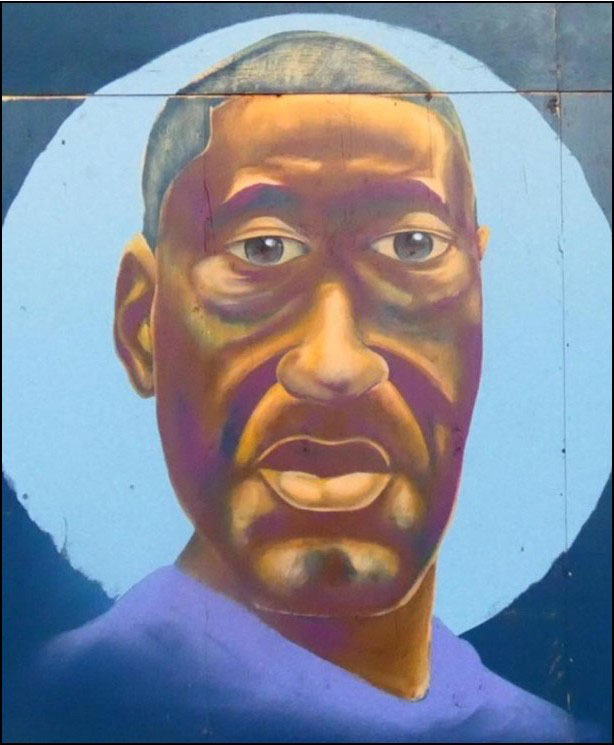
A mural featuring George Floyd temporally displayed in downtown San Jose, California.

Ten weeks ago, one of Breonna Taylor’s killers, Sergeant Jonathan Mattingly of the Louisville Metro Police Department, sat across from Michael Strahan on Good Morning America. The fraught and feeble—yet morally bankrupt cop suffering from little more than privilege managed to tell a murder story full of inconsistencies, befoul George Floyd’s memory, and when prompted—issued hope that Taylor’s mother will find a way to bare the consequence Taylor ultimately brought upon herself. In 10 minutes, despite being party to a sloppy and negligent police raid that ended the life of one and terrorized another, Mattingly managed to depict himself as the damsel.

Race had never been a factor to Mattingly who lives in a world different than you and me—where racial profiling is criminal profiling, murder isn’t really murder, rape is just cop sex, and illegal search warrants aren’t a desecration of one’s constitutional rights.

Go back seven months to the Friday afternoon of May 29th, where a scene—first seeded on the 101 freeway–soon settled on the normally uneventful grounds of the San Jose city hall, in middle California. A war zone pitting the San Jose Police METRO (SWAT) unit against incensed protestors. Profane shouts and water bottles crossed paths—midair—with amplified police commands and airborne cans of tear gas. Unlike our social justice neighbors to the north (Berkeley, Oakland, and San Francisco) this scene was uncommon. The burning of the lachrymator as it filled the air—then our eyes and lungs—of protestors, on-lookers and journalist, became as seditious as the modern day lynchings of our time. 2020 has become yet another milestone for racial inequality where the streets again speak for themselves—the same streets inspiring a 17-year-old white Trump supporter and cop enthusiast to pick a Milwaukee suburb as an ideal hunting ground.  Those aghast by the destruction, looting, and violence would be wise to consider: Would the level of anger & violence be so high if the bar for police conduct weren’t so low?

Earlier this year, a light—however dim, had been shone on the police. Stripped bare—the so called “blue lives” were paraded about the country’s town square while the Black Lives Matter movement trailed it with a ringing bell, shouting SHAME! SHAME! At least for a time.

The CATALYST: the peremptory homicide of George Perry Floyd Jr., a 46-year-old black man—strangled to death as four Minneapolis police officers circled him like a pack of wolves mid-lunch. One threatening anyone with the audacity to intervene…and the alpha male on his neck. Then came the shooting of Kenosha, Milwaukee’s Jacob Blake on August 23rd–by an officer with the fear capacity of 6-year-old girl (and a disregard for the concept of de-escalation) only furthered the disillusionment of the police race relations. Both scenes were a true testament to the founding function of our police. It brings us back to the days when officers blended in with smiling white onlookers while black men and women were captured and hung from trees like ornaments. The uniform worn by their attackers–makes them the byproduct of this lands racial epidemia, perhaps Floyd and Blake are the Strange Fruit Billie Holiday once sung of too.

Those unable to grasp the horrors of being black in the Jim Crow era, are insensible and unbothered by the residuum of it today. The decedents of the 1700’s slave patrols—those tasked with capturing, punishing, and re-implementing oppression on to those whom they felt lacked recognizable humanity—singled out, hunted, restrained, therefore robbing their detainees of control over their physical safety. The reintroduction to the origins of policing times itself congruently with our president’s introduction into the philosophy of 1960’s segregationist Governor George C. Wallace, this mystery era when America was supposedly at its greatest.

As a San Jose State University journalism student researching policing practices, I’ve seen the salivating eyes of officers relishing inconspicuous moments where they know their conduct will either go unnoticed or disbelieved. I too have been harassed and dehumanized. I too have felt the fear they impose, particularly when being black.

But before I’d conflated the race history of law enforcement with today, I find it interesting to note that my earliest police harassment often drew me to the convictions of Mary Turner—a young black woman who resided in Brooks County, Georgia in 1918–found herself decrying the lawlessness of whites and authority in her rural town when a tirade of lynchings had occurred in the search for a white farmer’s murderer. I understood her need to follow common sense over conformity despite knowing her voice would mean little more than a death sentence. One day after her husband had been one of 16 men falsely lynched for the crime, Turner was kidnapped and tied by her ankles to a tree to be set ablaze. A member of that mob took a knife to her pregnant stomach, cutting an 8-month fetus from her and stomping it to death when it fell to the ground before barraging her body with bullets. She was left hung from the tree to send a message.

Interacting with police forced me to explore my relationship with fear. Director Steve McQueen–a black brit, told the Hollywood Reporter in 2018 something of a mantra: “Sometimes you are constrained by fear. I always try to make fear my friend, because I know fears’ coming. I say ‘hey fear, how you doin’—therefore you just bring it on.”  Perhaps a sit down with tea may be the first step to confronting these blue boogeymen in dark corners.

Floyd’s murder had sparked a chemical response from police institutions across state lines—initiating what I like to call Operation Gaslight. First, a well calculated move to temporally halt a retort of BLUE LIVES MATTER by cleverly utilizing the public spotlight. Rebuking the abhorrent conduct of officers Derek Chauvin and his three partners, officers Tou Thao, J. Alexander Kueng, and Thomas Lane, debulking them like a cancer from the institution. Some falling to a knee as they claim to be the 99%, the words BLACK Lives Matter pained through gritting teeth—while patiently waiting for Floyd’s death and subsequently inarguable anger to dissipate like a morning fog. But ingrained habits die hard.

 

Spare the Rod, Spoil the Cop (Part 3/4)

The REPUDIATION OF RACE: Modern day policing descended from the 1760’s initiation of the slave patrol—their fundamental function was to keep black slaves oppressed and in their place through apprehension, discipline and terrorization. To work on a slave patrol was considered a civic duty, much as policing is today. Slavery may have taken a bow to the 13th amendment, but remnants of the institution are still allowed to persevere. African Americans are still disproportionately targeted more so than other races.

Surely there is still an advantage to race supremacy in police culture. Much like the recent incidents in Minnesota and South Carolina, news surfaced in June by The Medium, (a watchdog group) of retired and current San Jose Police officers utilizing a Facebook page to air racist comments towards Muslims and Blacks, those they viewed as the noxious variety. California is among 14 states identified by the FBI where officers have been observed actively participating in white supremacy groups. A disconcerting sort of Blue Nationalism where those inclined are cops first—and husbands, daughters, parents—or any other societal member—thereafter.

In 2016, white officers represented nearly 72% of law enforcement (and in 2019, 43% of the San Jose police), and though their numbers are declining, they’re still the largest racial group represented in policing. While that percentage may have altered, policing is still a white, male sport—and perhaps even more so a state of mind. Chauvin was white —and without rank, but years of experience, he dominated the scene of Floyd’s murder. (If slave patrollers failed in the slave duties, they faced retribution, something to consider when judging the actions of the other three officers.) But do non-white officers, through indoctrination, develop white cop state of mind. Decades post the civil war, a minimal amount of blacks were permitted to join exclusively white police departments because they were thought to control blacks better, but were not readily allowed to arrest whites. Police departments of today may be the greatest connection to the heinous traditions of the Jim Crow era—and may be the reason so much of the privileged cheer them on.

DEFUNDING THE POLICE is a logical aspiration—meant not to be the first but final step of resounding change for all. In 2019, the city of San Jose made the better part of its annual public safety budget (45%) rain on the police department’s luxury brick and mortar. Most cities budgets pay a hefty hostage fee too but I remember hearing a rumor back 2008—during the national recession—that while the bureaucratic department members were taking pay cuts and furloughs, our police union had negotiated pay raises. The concept of taking one for the team doesn’t apply when you’re a cop. This situation would lead to a huge pension battle between the department and our then mayor, Chuck Reed. It looked like the most calculated revolt of all time. Eligible officers rushed to retirement while others took up offers at neighboring departments eager to pick up the scraps. Officers saw demotions, recruitment declined and there had even been an allegation claiming an officer instructed a class of recruits to apply someplace else after finishing the academy.

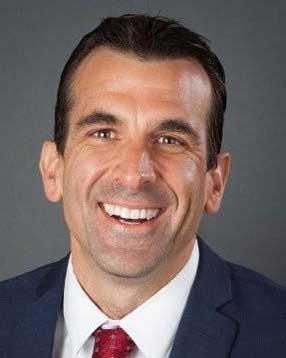
Mayor Sam Liccardo

Most importantly, morale declined. The attenuated department showed a decrease in response to calls, accenting their despair by mobilizing personalized RV campers in the department lots, claiming officers were so overworked, they used the convenience of an oversized, empty lot to sleep in their personal pricey RV’s. While pensions improved, salaries rose and city/department negotiations restored the quality of blue lives, the pricey mobile living facilities once meant to capture the attention of bleeding-heart citizens are still there.

But! I hear the reasons to defund and raise you some examples. In researching police calls conducted by the San Jose Police, calls involving a mentally ill subject became as cringe worthy as taking motor oil for a cold. On February 11, 2015, a distraught 23-year-old man choose the SJPD as his method of suicide, calling them to his home with the fabricated story of an intruder. It’s hard to contend that police can be more than a Jack Kavorkian invention to end life—despite CIT training, and I think law enforcement would agree, as long as the admission did not mean turning away extra government change.

Officer Wakana Okuma

I’ve watched San Jose Police Officer Chris Jolliff wrestle a clearly mentally ill, transient woman to the ground in handcuffs. I once called in a scene where a homeless man walked into a church and punched a man, unprovoked, sitting calmly next to him. Watching Officer David Sanchez (former SJPD) do what he was trained to do—as he pinned the disheveled, and clearly mentally ill man to the back of his car—felt sorely counterproductive. They needed help these officers were incapable of giving them—and death is not a remedy. Could a common-sense plan to reallocate funds by 2015 prevented Officer Wakana Okuma from shooting a bipolar 19-year-old wielding a painted drill in front of her father’s home? A number of these shooting end up in million-dollar settlements—monetary doses that could have served a prophylactic plan rather than an appraisal estimate on a person’s life. But even with recent changes implemented by departments across the country (San Jose included), the solution may continue to be a near miss—none of those dead should have met a cop that day.

AND THEN THERE’S THE KICKING AND SCREAMING. By law, cops can’t strike—but they can mobilize and delay, consequently monopolize public safety—a common practice synonymous with the Blue Flu, a concept very easily applied when the general public doesn’t know, understand, or care how you do your job. Delay of call response is a claim attributed to high call volume—and a low number of available officers. However, in San Jose, it’s never been uncommon to see too many officers at one incident, making some calls or debrief meetings look more like a holiday party. Call response for us is still an issue despite SJPD’s influx in hiring numbers. I recall one sunny afternoon, when a call went out over my radio while studying inside a coffee shop. One of the two officers dispatched (we’ll call him Officer Cano) sat feet away from me on the other side of glass. I watched him sip coffee for 18 minutes with a woman before he finally departed for the call. The reality is that delays happen because they’re permitted to, and it happens a lot, for both valid—and not so valid reasons.

San Jose is one of many corrupt police departments across the country—something I was warned about by a career journalist and those familiar with the department while attending university.  Now being able to confirm it, I’m left to ask: Is that a bad thing—particularly to those governing the department? I’m sure members of the POA and those flipping burgers over a grill at officer hosted bar-b-ques I once had the pleasure of attending as a youth would say no—perhaps preferring to give “corrupt” a more inoffensive label. Maybe “pride”—and self-perseverance, the selling points drawing recruits through the door.

Chris Jolliff and David Sanchez are two very different officers, who conducted themselves contrastively (I’ve observed both and interviewed one). To generalize the quality of both—only to list them in the default category of ‘good cops’, would be a degradation to one, by the other—especially when not keen to their entire histories. Outside of this moment of clarity, the analysis of all departments and all officers cannot be ubiquitous but the expectations of them can be—and still a uniform remedy is called for.