Article 5: I’M NOT OK

At the intersection of sexual assault and authority, perpetrators who wear the badge are still overlooked.
If you or someone you know has been the victim of sexual assault, call the National Sexual Assault hotline:
1-800-656-4673

It’s been about fifteen years since I last entered a haunted house. I felt emboldened to face my fears at Universal Studios, walking through the recreations of some of my favorite horror films as actors in Chucky costumes and Evil Dead deadites jumped out of dark corridors—chainsaw wielding monsters running through the park. I went donning a new perspective on horror and the form monsters can take in our lives. Twelve years ago—this past October—I was sexually assaulted by a police officer.

A few months ago, I was relatively sure I saw my perpetrator. The very sight of him gives me panic attacks—a person I was once fond of now makes me panic at the sight of him. It was only his back side, walking with his wife and children—and if it wasn’t him, it was the ghost of an inevitable subject I was due to write about in the later part of this year. After the departure of a different problem officer I’d been writing about left the San Jose Police Department in early 2022, I took an involuntary break from writing and research—subsequently backpedaling from the events of my sexual assault. I traveled and regrouped looking for a way to reapproach my book—not anticipating how onerous revisiting my rape would be.

A therapeutic walk through Disney

Sexual assault akins to a special type of horror and it’s un-mollifying. Film and television have certainly come to engender an acknowledgement of the realness of the trauma. As a longtime Monica Bellucci fan, my first cinematic experience with the subject had been her infamous rape scene in the 2002 French film Irréversible. The repercussions of sexual assault, rather than the act itself, is finally getting realistic focus in such shows as HBO’s I May Destroy You, as well as films like the 2022 Harvey Weinstein exposé She Said, and 2019’s Bombshell. Sexual violence is, as #MeToo founder Tarana Burke describes ‘a prevalent pandemic’ that even the white supremanistas of Fox News could not relegate to left wing wokeness. During one of the final lines of Bombshell, Gretchen Carlson—portrayed by Nicole Kidman—informs the audience that most people don’t believe sexual harassment allegation unless they are the victims or know someone who is, offering to be that person for us all. If you’re not a victim, you know one.

Public figures have increasingly come forward about their personal stories—from celebrities like Evan Rachel Wood, Charisma Carpenter, Rent’s Anthony Rapp and Oprah—to Brazilian singer Anitta and United States Congresswoman Alexandria Ocasio-Cortez, using their platforms to spread awareness. In 2015 Lady Gaga released her single Till It Happens to You, later detailing her assault by a music producer. It is the common exertion of power and control that thread their experiences, with social platforms like Youtube and Tiktok increasingly becoming a common place for those to shout their stories. 1 in 6 women will experience some form of sexual violence in their lifetime.

Ethical dilemmas

2021’s inevitable changing of the guard for the San Jose Police came in the form of Chief Eduardo Garcia retiring for a top position in the lone star state, and I sensed a true conclusion to my research into the department. Smoke doesn’t bellow from the roof with a new chief, but a change in morale portends in such a non-elected, political position.  The appointment of Anthony Joseph Mata, who started with the SJPD in 1996, was nothing short of kismet—for he had long been on the list of officers I had researched. Years prior, as a midnight shift lieutenant, Mata had taken the police report of my sexual assault.

Chief Tony Mata (right) next to words he’s NEVER said, Instagram repost by mental health expert Lindsey McGuinness. (photo: SJPD)

In his 33 reining months, Mata has waxed polemic against anti-woke symbolism, drunk cops, racist cops, bigoted cops, and sexual assault. In June 2022, officer Matthew Dominguez was arrested for allegedly masturbating in front of a woman and her adult daughter while responding to a domestic violence call. Mata, who has not been camera shy, had a camera crew filming as he booted Dominguez out the doors of the building housing Internal Affairs, onto the city street (for the Academy’s Consideration, wink). While certainly worth a thousand PR statements, past complaints of sexual assault by Dominguez had previously been laughed off by the department. In such a time of police scrutiny, it’s easy to paint oneself the hero when you control information.

But that’s not the Tony Mata I knew. I’ll get to that.

It is well known district attorneys and police cohabitate in the unholy union of lopsided justice. So, it’s worthy to reference Santa Clara County District Attorney Jeff Rosen’s statement regarding a previous PSV case: “Although rare,” Rosen states, “on-duty misdeeds bestow an unjustified blight on the stellar reputation of our hard-working peace officers”. To correct Rosen’s bad apples delusion, police sexual violence is not rare, but the prosecution of it is. In a California Law Review article, between 2009 and 2014, “nearly a thousand police officers nationwide lost their licenses as a result of sexual violence allegations”. Prosecutors make useful bedfellows for some officer perpetrators as they slip through the fingers of justice.

On average, only 5% of sexual assaults are prosecuted.

Mata, who questioned an expansion of police oversight in 2022, appears convinced oversight vitiates police identity, more than its function. His determination to publicly display SJPD as “self-cleaning” may just be the trepidation of facing a similar disposition of those under DOJ parental guidance—like California departments Oakland, Los Angeles, and Vallejo, as well as Louisville, Kentucky, New Orleans, and Seattle, Washington—castrating the departments freedoms and autonomy to do as they please by the checks and balances funding them. Consent decree or not, chiefs and their troubled departments don’t want to be sent to the corner for time out—and they don’t want to be policed.

According to the Washington Journal, courtesy of the National Women’s Law Center, police sexual misconduct (PSM) or police sexual violence (PSV)—scholarly defined as when “a citizen experiences a sexually degrading, humiliating, violating, damaging, or threatening act committed by a police officer through the use of force or police authority”—is the second most common complaint of police misconduct after excessive force. “The rate of sexual assault by police is more than double that of the general public” (2010). And when reported, is typically adjudicated by the perpetrator’s peers. The US military, whose filtered out much of their cadets into US police departments, has a similar report through ranking procedure. The investigating officer may be your rapist’s friend.

2015 saw the conviction of Oklahoma Police officer Daniel Holtzclaw who, through tears, swore his innocence as prosecutors presented evidence of his victims DNA being found at the crotch of his police uniform. Brett Hankison—one of the officers accused of killing Breonna Taylor in a 2020 botched raid—had previously been accused of sexually assaulting two women in 2018 while on duty, an accusation that was largely covered up. One of Hankison’s accusers, Margot Borders told Vox News she didn’t report him out of fear of retaliation, stating “Who do you call when the person who assaulted you is a police officer? Who were they going to believe?”.

The trauma is palpable, and the retaliation preceding can be just as a much.

2023 alone has seen sexual assault charges and convictions for officers from departments in California, Illinois, Texas, Pennsylvania, and Alaska—Loveland, Colorado and Hutchinson, Kansas, just to name a few. The point: sexual predation in policing isn’t an anomaly, but a characteristic of hegemonic masculinity culture.

Really puts Santa Clara District Attorney Jeff Rosen’s comments into perspective: things are not always what they seem.

This is my sexual assault story.

CASE #20

Every year, a branch of San Jose, California’s city government issues a mostly ignored, written analysis on incidents of police misconduct. The office of the Independent Police Auditor has been a soft approach to those who, prior to 1993, decried a lack of oversight for the San Jose Police. Neutered of genuine function, the office has access to the confidential complaints against officers, can sit in on officer interviews with Internal Affairs and can make recommended changes to the city council.  They cannot review department-initiated investigations, nor can they override internal affairs decision. They can receive complaints against officers which are turned over to the SJPD’s internal affairs division—making the office the equivalent of screaming into a $1.4 million paper bag.

The annual reports typically feature a repetitive run down of its functions and powers along with succinct rundowns of complaints against officers and the department. The only constant being the alarmingly low ratio of complaints to those sustained (terminology used when an officer is found to have committed said allegation). Summaries of the accusations and involved parties are altered to protect the identity of those involved.

Their 2013 report featured two alterations about my case that were made: that I was schoolteacher, and that my perpetrator and I had an on-going sexual relationship.

Bridges Academy in San Jose, CA.

My sexual assault did occur at a junior high in central San Jose, where my perpetrator did pay job work as a resource officer on his days off. I was a college journalism student researching SJPD. 8 out of 10 victims are previously acquainted with their attackers, and I had shadowed mine for a little over a year before the attack happened. He was the third of six officers I would profile from the department—out of a list of 135 department members. [For more, see my previous article “Notes on a Story”.]

Before the attack occurred, my rapist called it “a test”.

San Jose Police was his third department of employment for a little over ten years. He was a potential gypsy officer—spawned from a family of cops and limited in talent—he was enticed by the advantageous profession. He graduated from high school two months after I was born. He was lazy, charming, balding, financially burdened, with a talent for Stevia shakes and imposing nicknames (a habit I inherited). Candid about his propensity for making stupid decisions, he lurked below the radar and spent his sixty-hour shifts bending the rules if they didn’t break. He was a valued source of information. He called me Snooker.

Ofc. Wakana Okuma

After the rape, I eventually felt the need to confront my perpetrator, and at this point he thought I was trying to record him doing it. He had me pulled over one night by a female officer named Wakana Okuma (she would later gain local fame for killing a mentally ill woman holding a drill). A notorious sergeant named Robert Lopez came to my window. Wedging his bulbous head through, he gritted through his teeth for me to leave my rapist alone. Bobby, I called him, was then informed that I had been raped. He stared me down asking me point blank: ARE…YOU…SURE?—claiming he was obligated to tell the division lieutenant. I had learned that Lopez and Okuma had been helping my perpetrator in building his victim story up to this point. Okuma escorted me to the department where she took a small women’s utility kit off me, pocketing it for herself.

Sgt. Robert “Bobby” Lopez (ret.)

Months before the assault, I had dubbed Bobby Lopez The Lorax after the Dr. Seuss character—he resembled Violet Beauregarde after her unauthorized consumption of Willy Wonka’s three course dinner gum. My perpetrator had a nickname for him, but I don’t remember it. Upon our first meeting—months prior to the assault—Lopez told me in front of a room full officers he wanted to hump me like a three-month-old puppy. Sgt. Bobby Lopez was my first introduction to the cop supremacist—those badged who believe cops were impregnable and superior (aka, above the law). While local press tittered, officers kneeled at The Lorax’s feet because as President of both The Police Officers’ Association and The Fraternal Order of Police, he fought for their impunity. Crime without time.

The nefarious former cop has even expressed doubt of believing women on social media. False reporting is incredibly rare and found to be between 2% to 10% of cases.

Lopez the Lorax retired in 2013. His wife of 36 years, sergeant Kathleen Ferrante Lopez, retired from the department in 2016.

The night I came forward, I was taken into a foamed wall interview room where a flippant Mata asked me questions about the assault. He also asked me about the first officer I was profiling but considering this had nothing to do with my rape, I choose not to divulge information about my research and kept my answers simple. Upon leaving, Mata and I walked into an elevator joined by a tall caucasian officer, where the two quipped back in forth like frat buddies. That was the moment I knew there would be NO adult in the room during this ordeal.

Internal Affairs soon called, but appointments were made, and self-canceled more than once. I was frantic. It seemed a strategic decision to have a female officer call me, and Lisa Gannon was—somehow—the best they had. It was made clear they could not guarantee my safety but like words off a script, she flatly uttered on the third call: Do you want him to do it to someone else? I made a date and kept it. Unfortunately, on the first day of spring semester.
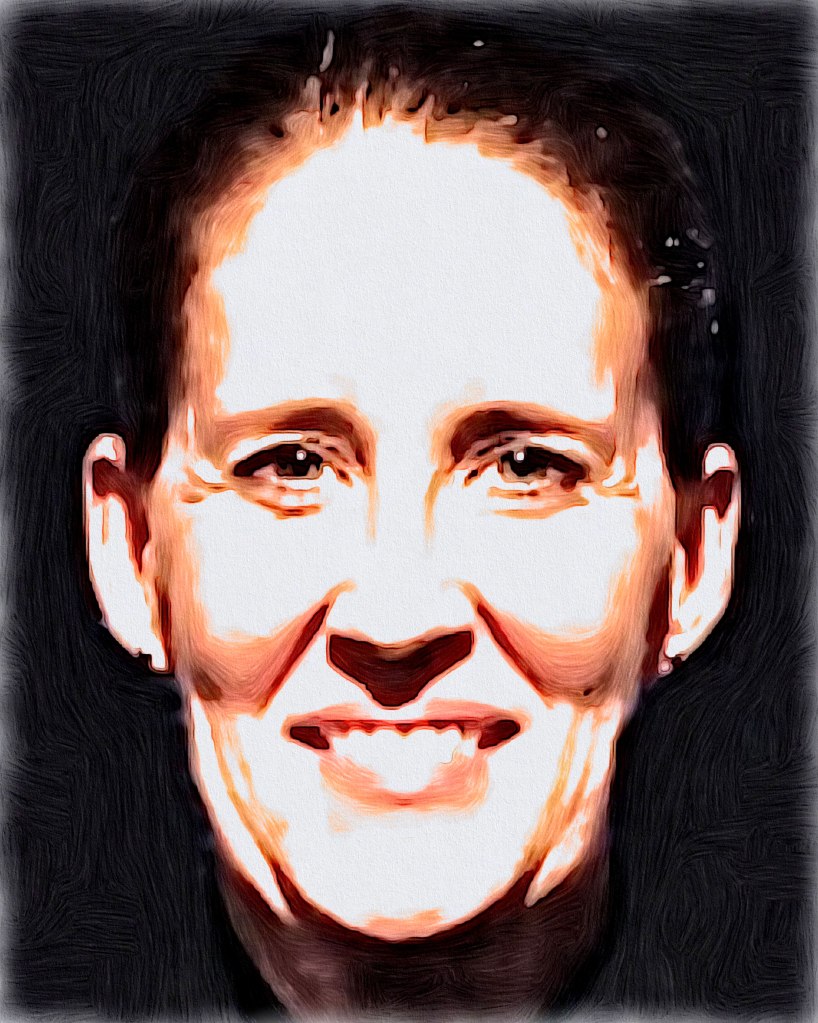
Lt. Lisa Gannon (ret.)

On a brisk early morning in January 2012, I met sergeant Gannon, a tall, skeletal redhead and her shorter partner, sergeant Johnson Fong—both looking weathered in the face. Gannon, 48 at the time, had started with the department in 1990 as a dispatcher, becoming a sworn officer in 1995. To my knowledge, she was single and childless, a runner and avid dog lover. Fong, 46, had started as an officer with the department in 1989 and was married to fellow SJPD sergeant Erin Lane. I would later learn Gannon and officer Okuma were Facebook friends.
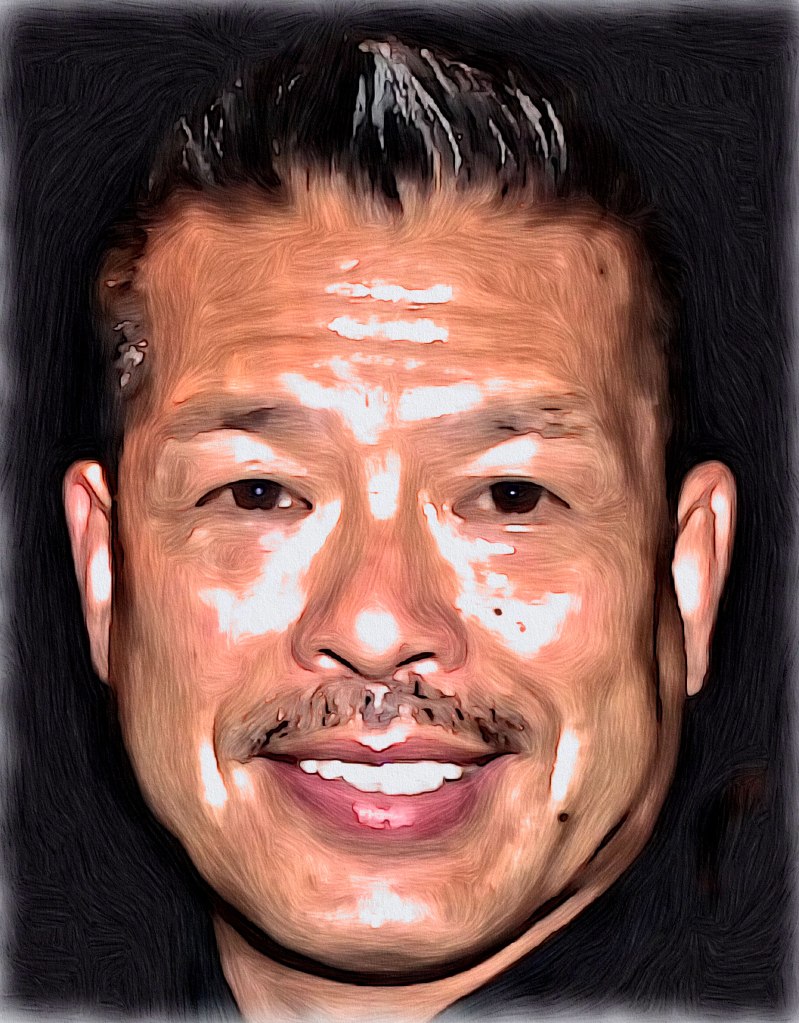
Capt. Johnson Fong (ret.)

Upon my arrival, Gannon ripped my phone out of my hand and escorted me to the bathroom. From there, I was taken to a different floor where both officers scrambled for a meeting room. We ended up in a small room festooned with toys and a two-way mirror, I wondered who was on the other side. My rapist?

Gannon took the bag containing my DNA-stained dress, strategically placing it behind her chair. Fong darted towards me with a Q-tip, scraping the insides of my mouth. From the top of a seven-story building, I could see the branches of a pine tree and the gray sky just past Gannon’s head. It became my safe spot. I think about it every time I drive past that tree. For the next four hours, I was interrogated. Gannon played bad cop while Fong attempted to play the silent good cop.

At times, the interview likened to bad community theater, where Fong and a woman in a man’s uniform portrayed Stupid One and Stupid Two—the realization these two were in charge being the most disparaging part. NOT AN ADULT IN THE ROOM.  “You’re too angry/You’re not angry enough”. “Why are you crying?” I told him NO! Gannon: “but why didn’t you scream/why did you allow yourself to be alone in a room with [a cop]”. It’s insulting being questioned by someone whom you can hear in her words had never been sexually violated, or who let alone, lacks respect for the violating act.

My perpetrator said I was dressed inappropriately; Gannon wanted a picture of me in that dress.

I could see how much she wanted to beat a recant out of me. I wanted her to know how much I realized after the assault that reporting wasn’t an option. I tried to convince myself for weeks that the assault was healthy, that it toughened me up. I washed the dress. I visited my perpetrator and tried to convince him of mercy, that I wouldn’t report him—that I was still his ally, even bribing the fat man with his cheap treats to avoid his ire.

Police reports would later reveal he’d begun his plan to discredit me from the moment I left the scene of the rape, starting with the middle school secretary. Due to my preceding reaction, I didn’t pass his TEST. The six-foot tall, 250-pound cop’s imputations would put a target on five-foot-three me. He knew he’d raped me before I did. I now think he always knew he would.

As much as I tried to convince myself different, my body knew something had happened. Panic attacks commenced, I grew increasingly anxious and had trouble sleeping. I started drinking hard liquor when I hadn’t before—something was wrong, and your bodies’ telling you it’s time to scream.

“Be honest…didn’t you like it?”

“Why are you getting sooooooo angry?”

The fact I said NO multiple times didn’t faze Gannon, she was a proponent of my rapist—she was my rapist—to the best of her ability, perhaps seeing me as the representation of women that make it harder for her to assimilate into her own profession. Neither Gannon or Fong had ever worked in a Sexual Assault Unit of the department, and it was quite apparent neither had personal experience with sexual misconduct.

I told them I was a journalism student, they both gave each other non-verbal glances, one of many. When the interview was over, both sergeants handed me a letter from my rapist. In which he pretended that I was pining for him, using the very words I said to him before the assault. Damn them both!

According to a 2019 Dallas Morning News article, Why are we so bad at prosecuting sexual assault, “when investigators aren’t trained in trauma-informed practices, they might use interrogation tactics on victims, which only makes the process more traumatizing”. And it did.

Managing my way down five flights of stairs—the crash didn’t hit me until I sat in my car, realizing my first class had been missed. I was in a mental tunnel by the time I got to the San Jose State University campus and after my first phone call, I was walking while in tears. I found the professor for my missed class, and through sobs, pleaded with her not to drop me because I had just reported a cop for rape. I called a friend in Florida as I waited for my next class to start—I could not stop crying. I wandered into a pink building as the call continued, collapsing at the top of a staircase. I was in complete fear and panic and cried like my body was purging. My friend had to hang up and I sat crying.

A woman with wavy red hair came out of nowhere and gathered me off the steps. With her hands on my shoulders, she walked me into an office I’d never seen, telling a woman behind a desk I needed help. The next woman grabbed me and rushed me into a small room with multicolored walls, a couch, a desk, and a chair—and another woman ready to listen. This was my first time in therapy.

I spent two years in on-campus therapy and counseling under the care of the university psychologist, Dr. Lo—three different counselors (and two sexual assault support groups through YWCA). My first counselor, Amanda, being the rock I needed through restraining order hearings where my perpetrator put on a show of intimidation (he brought a date to the first hearing, whom someone said they heard had charged him by the hour). I would schedule therapy after court dates, with one day feeling particularly suicidal as I walked from the courthouse to my session. It was raining and I told her I just wanted to walk into traffic. I didn’t choose to be raped. I didn’t want this to happen.

I was STD tested and put on an anxiety medication that initially zombified me. I’d totaled a car and would have moments in deep deep thoughts. The first year consisted of annoying crying spells where I’d sit in my car and spill everything to a rape or suicide crisis hotline.

You Should Be Sad by Halsey cultivates my existing struggle with the situationship my perpetrator and I existed within. With the psychiatrist, I discussed the struggle of reconciling the man I knew versus the man who attacked me—the protective glass separating me from the zoo animal was never there. I was told to separate him into Perp A and Perp B. But as I wonder through Disney today, my Mickey ears wonder if Perp A ever existed. Things like this can make you go crazy. I’m a journalist and I will continue my book writing the facts, we don’t have to know the why to move forward.

So what happened to my perpetrator? After temporarily being removed from duty and a rumored department hearing, he received sustainments for wearing another officer’s uniform, conducting police pay jobs without a permit or reporting the hours worked, giving false information in a police report and during a criminal interview, and since he claimed to not be armed during the sexual assault, he was reprimanded for that. The sexual assault was relegated to sex on duty, in other words CONSENT—which according to the California Law Review: Police Sexual Violence, this is a common tactic police departments use when an officer is faced with rape allegations.

Staying faithful to statistics, the Santa Clara District Attorney’s office declined to bring charges against my perpetrator, and in addition, has refused to discuss the case, sequestering it from legal view. The Santa Clara District Attorney’s office has continued to use my perpetrator as a witness, despite his reprimand for giving false information.

September 2013, just under two years after my assault, Geoffrey Graves, a six-year officer, would be accused of raping a woman he was tasked with escorting to a hotel after being dispatched to a domestic violence call regarding the victim and her partner. Graves, who later claimed the Spanish speaking victim was coming onto him, had reportedly returned to the hotel room, and raped her. The victim reported the assault a month later in a similar fashion to mine, during a traffic stop.

Graves was fired by the San Jose Police and charged with forcible rape by the district attorney. Despite this, he’s maintained friends on the department like fellow officer Michael Ceballos who claimed he and Graves had been long time friends. Graves was tried in 2016 and again in 2018 after an initial hung trial, only to be acquitted. Due to the commentary of the hold out jurors, it was evident that desensitization to sexual assault secured Graves’ freedom. For these jurors, they maintained deranged hope that even someone who looked like Graves could attain kinky random sex from a domestic violence victim—but believing women was just a bridge too far.

During the 2013 annual presentation of the Independent Police Auditors report to San Jose’s City Counsel, I sat silently as I listened to LaDoris Cordell, and then department chief, Larry Esquivel discuss my case, and others. When pressed, I watched Chief Esquivel demote the misconduct, declaring discontent for being told how to police his own department.

Christopher Moore, who served as SJPD chief during my sexual assault, led the revolving door of culpable leads over the course of time.  Chief Esquivel oversaw my perpetrator’s return to the department and the initial harassment—retiring in 2016 to take a second income as chief with the Tracy, California Police Department where he was fired in 2018. Chief Eddie Garcia served during the remainder of my harassment where I was permitted to be targeted, till the end of 2020.

It didn’t matter that I had tried to stay silent or pursue a cease fire, despite being raped, the following years would require me to lay down and take more. No one was coming to save me as the retaliation from officers became frequent and pernicious. Though I paused my research into the department, I continued researching calls, which led to more retaliation. I suddenly began being pulled over, officers were approaching me, following me, driving past my home and intimidating me. My car had been broken into twice and my electronic property had been seized for destruction my senior year.

Sgt. Greg Connolly (ret.)

Under Garcia, an edict in the form of a BOL was put on my head department wide, giving officers free range to initiate contact with me, which officers like rookies Marco Mercado and Patrick Baldassari took joy in. My rapist’s supervisors also jumped at the opportunity—his former sergeant Amir Khalighi, known for harassing black and brown citizens, attempted a threatening encounter.
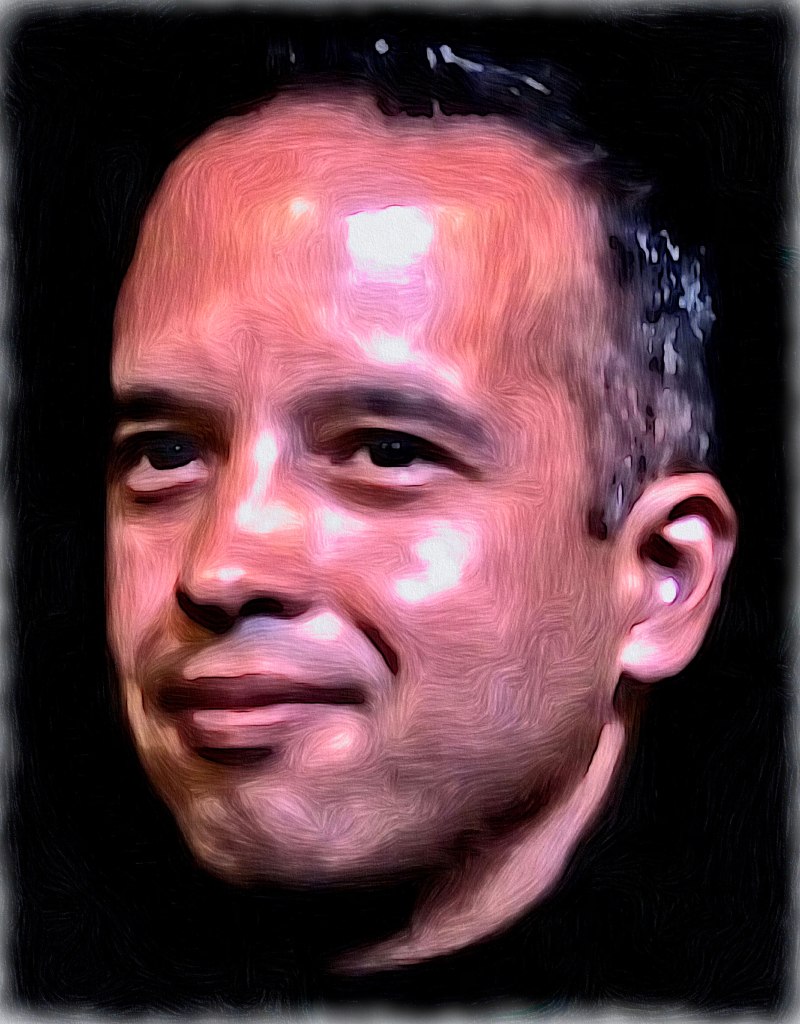
Deputy Chief Jaime Jimenez

The worst retaliation came from sergeant, now Deputy Chief Jaime Jimenez.  Jimenez, though average in stature, engaged in verbal and physical intimidation, accusing me of falsifying my assault. He stole a piece of jewelry I was gifted after the assault that has since been remade. When present during a questioning from another department about the assault, he attempted to keep me quiet from talking about.

Even Mata, who I encountered a year later at a community meeting, couldn’t help but snarl at my sight. As the list of officers grew, I expanded my research into police behavior [See my previous article Notes on a Story]. Derision, harassment, and dirty looks continued from officers like Eric Bucholz, Amanda Estantino, Matt Croucher, Lyle Jackson and Paul Joseph—as well as former officers Capt. Greg Lombardo, Jonathan Koenig, Sgt. Greg Connolly, Lt. James Ford, Tim Jackson and Robert Payne.

However malleable or juvenile they may be, sexual assault remains a police locker room punch line, and to them, I’d crossed a line reporting a cop.

Biting the Bullet

Trauma, I’ve been advised, is like a weight: the more you flex it, the stronger you’ll get. On the day of the sexual assault, I was parting ways with perpetrator. I told him a couple of weeks before that the end was near, and I thought he was going to be fine about it—but his reaction was different. I told him I wanted to thank him for providing access to other officers and for being so frank with me in our interviews, but that I needed to move on to other officers and that my focus would be on police calls once the semester started. 

When he showed discontent about the decision, I invited him out, off duty. He asked what would happen if he fell in love with me. I laughed and told him that he wasn’t relationship material, but if he wanted to keep in touch, I would appreciate a source. He hesitated for a time, before telling me that he needed to be able to trust me. That he needed to be able to do something illegal in front of me and not worry about me talking about it. But he said I had a big mouth.

I’m journalist!  This was always just a story. In another lifetime and another universe—before the rape—and minus all his toxic quality, things could have been different between us.  I’m not someone who could be married to a cop—I can’t cater to police misconduct. I didn’t want to be around the sewer rats anymore.

It was sometime after this moment that the sexual assault occurred. The test!

A Youtube commentator highlighting the issues of reporting sexual assault.

And what would have happened had I passed his test? What would that have looked like? Did his wife have to pass that test? Would Deputy Chief Jaime Jimenez or Chief Mata have passed it? How does one pass the test of rape? That’s an unpassable test.

My perpetrator wasn’t a good guy. From the day I met him, I watched certain officers slide to the other side of the room when he entered—but on the surface he was convivial and funny. You wanted to scratch his surface but nothing deeper. He was frank about a lot, but omitted some troubling details.

When I met him, he was the day shift wagon so he wouldn’t be dispatched to calls, but out of hatred for the big blue transport van, he’d check out a reserve vehicle not assigned to certain policing districts. Said he worked days so he could be with his father when his holiday birthday came around. Hadn’t pulled over someone in three years because he didn’t want to find himself in court on his days off. He’d leisure around his shift, sneaking into the security office at a now defunct Safeway in downtown San Jose for hardy midday naps. And then there were the sewer rats!

Three individuals by the names of Paola Sabida, Daniel Trevino (the son of a retired SJPD officer named Andy Trevino), and Willy Martinez—made up a gross of groupies who orbited my perpetrator. Each were given weekly ride alongs where they were provided police radios and allowed to play cop for a shift, sometimes even answering the radio as an officer. Unattractive and awkward, but when surrounded by the uniformed elite, they seemed to gain purpose. Willy, who my perpetrator called Helmet (while I called him Bobblehead), had an abnormally large head which could have been a birth defect. He loved my rapist and would often view me as a threat—but was willing to answer interview questions for me. He told me that he had been in a canceled police academy, and that he and my perp met when my perpetrator was sleeping with his sister. I think my perpetrator had some unconventional feelings for Bobblehead too but didn’t disclose much about their relationship.

Technically, they may have been considered badge bunnies, to which I do not know the extent of the services they provided to these officers—but in my notes, they were The Sewer Rats. They all had multiple social media connections with several cops on the department. Sabida looked like mutant toad, while Daniel looked like a mild manner mouse. They were all granted unofficial access to the department. I hated the sewer rats, and while I was tipped off to illegal activity occurring, my interviews with my future perpetrator were concluding, and so was my time in proximity of the sewer rats. The ignoring of illegal activity is the part I have trouble living with about that period.

Out of the questions posed to my attacker, nothing is left unanswered, but I still ask why did this happen? In place of that answer, interposed is years of therapy and the regurgitation of the facts—the time, the place, his department, and the rape—and if he may possibly do this to someone else. And in perjuring himself, I will never be able to question the fabulist again—for he is now an unreliable source.

A few years after the assault, I resumed investigating my perpetrator along with the rest of the 135 officers in my sample group and discovered he became a dad a couple of months before we met, despite his claims of having no children. In his own words, he’d “f**ked up and got a girl pregnant”. In her criminal file, the mother stated that they were engaged during my assault, and he married her while he was being investigated, the sewer rats in tow. He retired in 2016 after I’d discovered he had started a business that qualified as a department violation, he then left California soon after. My perpetrator and the Santa Clara County District Attorney’s office blame me for his early departure. To them and the SJPD, they contend they lost a good cop. What do you think?

Police Domestic Violence handbook by Diane Wetendorf/Life Span

Lisa Gannon and Johnson Fong were both eventually promoted to Lieutenant in 2013. Fong promoted to Captain in 2017 then retired in 2019, making an unsuccessful bid for Chief of Police for the San Jose State University Police Department. Gannon retired in 2020 and has left the state of California.

Until our recent encounter, I hadn’t thought much about my rapist, but he’ll be on my mind for a time as I rewrite the hardest section of my book. My panic attacks have resurfaced and I’m back in therapy for the time being—relegating him to the rest of this season’s ghouls and monsters.  I wear a piece of jewelry with his name, and the name of another officer on it. It’s a reminder that I’ve survived some very scary people.

A noted recommendation to combat PSV is the hiring of more women in policing, and while women are not identified as prolific abusers, it will not curtail the abuse or the retaliation. I was harassed by Gannon when she promoted to beat duty as a lieutenant, in addition to other female officers like sergeants Karen Aten, Jodi Williams and Lieutenant Kendra Nunes, who gave aide to my perpetrator.

Organizations will purposely avoid addressing statistics specific to PSV due to their proximity and reliance on what they see as the bigger picture of non-police sexual assault. A local organization, Next Door Solutions to Domestic Violence, despite its name’s sake, also helps police departments to retaliate against victims. Sexual assault groups are avoiding the acknowledgment PSV entirely. There is still room for improvement in the sexual assault support community.

If you too have survived sexual assault, I hope you had access to the same great therapy I had. Your world isn’t ending, and you have not depreciated from the trauma. I’ve had police officers join in chorus with my rapist calling me a slut and decrying my audacity to come forward—but misogyny is one of the characteristics of policing.

If you’ve been raped by a cop, you have options, which includes contacting your local FBI branch. Retain a lawyer who specializes in PSV before you have any communication with internal affairs because when you hand over evidence, that is where it will die. Seek out organizations like the YWCA and other sexual assault support groups. And take comfort in the community of individuals reluctantly thwarted into this not so small coterie of survivors.

It’s okay to be angry. Today, perhaps I’ll scream into a conch.

Greetings from Key West.

Article 4: Notes on a Story

When it comes to policing, the devil is always in the details, and where the truth inevitably waits.

ON MAY 25th, San Jose, California became the setting of the 15th US mass shooting in 2021 where nine men were killed in the Valley Transit headquarters located in northern District Victor, after the shooter, Sam Cassidy, set his home ablaze in the central southern policing district of Lincoln. Mass shootings are quickly becoming the crop circles of our time—in which we wonder when and where—not if—and by whom they will occur. Within hours of the act, the FBI, ATF, and local police put a mic’d podium on the world’s stage—a concrete divider centered along a main street amongst the maelstrom, their suits certifying the dire moment.

lt. Jaime Jimenez

Then. A sexagenarian, blonde woman slowly creeped out amongst the forest of men, adjusted her sheriffs’ uniform (gold stars and all), and took over the grand stage. I turned off my computer. Nine people had died and I wanted to feel the moment, but to those in the know, bad cops become gnarly distractions to such tragedies, or such tragedies serve as timely mischaracterizations for bad cops.

The six-time elected sheriff of Santa Clara County, Laurie Smith, has been the center of campaign contributions controversies (in which the undersheriff and a captain have been indicted by the Santa Clara District Attorney, but Smith has not), alleged past sexual harassment allegations and under her watch, a mentally ill homeless man was beaten to death in 2015 by three deputies who are now serving fifteen years to life prison sentences each—in addition to behind the scenes shenanigans better saved for another article.

ofc. Sean Ancelet

She’s appeared on the Investigation Discovery Channel’s See No Evil and Web of Lies, where department heads are typically not interviewed to rehash investigations they did not conduct—the self-interposed Smith had sincerely become too much for me. A woman known to show one face to the world—and another to her department walls, I feared her public lack of humility would turn this moment farcical.

Smith is a Michigander from the Mitten, a republican, and after years of questionable transgressions—both morally and monetarily—she is yet again the focus of polemically laced calls by officials for her resignation over county jail conditions.

sgt. Ronald Bays

Ultimately, Smith’s failures are the fault of those who continue to vote her into power cycle after election cycle. Hers’ is a political position and as constituents, we don’t seek ethical leadership—come election time, we want to be “mind f*cked”.

After ten years of studying police behavior, I’ve learned to keep officers like Smith in perspective, necessary when in possession of a queasy stomach. While Smith is not an officer I’ve researched, she is evidence of the involuted and not so black and white makeup of law enforcement the country is now daring to simplify and solve. I’ve met a lot of bad cops. Nothing about police officers is straightforward or categorical.

ofc. Tim Jackson

I too once believed in the ataraxia inducing sales pitch of the ‘good cop/bad cop’ myth, growing up around a police department, the good cop was every cop I knew, but in hindsight, there were signs. Perhaps I had been too advantageous to realize that officers like Smith were complicated, therefore convoluting the profession.

The past year has been a looking glass into this uncategorical institution where we watched former Minneapolis police officer—and lynch by cop murder defendant—Derek Chauvin, meet an all too rare judgement where for centuries, white men had been acquitted by predominately white juries for similar crimes.

ofc. Joel Martinez

Even as George Floyd’s slow death played on loop, we learned how defensible cops were as Floyd was continuously (and still in social media today) put in the defendant’s chair—while Chauvin’s previous conduct, which includes, but is not limited to the beating and choking a teen boy—somehow seemed not so bad. The sympathizers of Chauvin and his gang of four highlight the realization, that to some in society, an officer’s crimes will always be deflected by the shiny badge—relying on a dire reality: look deep into their eyes and you’ll see the soul of every American cop.

sgt. Daniel Krauss

While weaponizing public trust is nothing novel for police, blunt double standards and the inability to envision or comprehend a higher quality of policing in this country has been our handicap. Floyd’s death moved the goal post to end the nucleus of police misconduct: qualified immunity—but the conservative parties’ involvement (who’s made Back the Blue a party trope) has made the remedy just about as cloudy as the problem. Who knew things would get complicated on January 6th?

ofc. Amanda Estantino

We saw an act of terror on the nation’s capital, as footage of uniformed police were seen beaten by crowds containing white supremacist, as well as current and former military and police such as Karol Chwiesiuk and Alan Hostetter, marching united under the MAGA umbrella—striking blows with polls fastened to blue lives flags. Outsiders were front seat for this unforeseen domestic squabble: Blue Lives mattered until right wing politicians perceived the actions of the capital police—defending the capitol against their mobbing constituents—as an act of (police) biting the hand that kept them feed. Yet the recent talks of police reform show republicans can’t relinquish dreams of a racially oppressive vestige—indemnity free policing from days gone past.

capt. Paul Joseph

On MSNBC’s The Beat with Ari Melber, Marq Claxton, who is the director for the Black Law Enforcement Alliance, had a disassembling thought on the phrase. “Blues lives are Smurfs. It’s never been about police lives or that blue rhetoric, and the blue wave really. It’s all about something other than respecting the law and order and sanctity of life, etc.” The former NYPD detective continued, “what this has been all about, and continues to be about, is a political movement trying to pull in as many of these so-called blue-collar workers—in spite of, and this is what amazes me about police—they tend to rally around these blue lines nonsense things, in spite of what we’re seeing here [the testimony of capitol police], where often times these same people who are promoters of everything blue, have turned their backs on you.”

ofc. Marco Mercado

Discombobulated yet? Police are without definition in a current time where some department heads seek to shed the very roots of white supremacy it once sprung from. They’re like the hive mind alien, Unity, from Rick and Morty or a profession filled subterraneously with those who read to many Judge Dredd comic books in their youth—but for now, there is no clear comprehension of policing amongst the malleable public and those whose vision and scrutiny derive from personal encounters or regular consumptions of COPS, Live PD and PAW Patrol as the litmus test for how things should have ended.  I get annoyed when people think it’s that simple.

ofc. Noel Gaytan

April 20th of this year marked the tense delivery of the Chauvin verdict and the police shooting of a 16-year-old girl in an Ohio suburb.

I imagined the protesters, war torn from a year of constant battle cries, grabbing signs from their closets. It was the first time the impulsive marching felt vacuous and risked devaluing the movement of justice without a review of the facts. Studying San Jose police calls made body camera footage immediately released to the country by the Columbus Police Department seem more quizzical, than anger provoking. My disdain was suspended by the question of what and why?

sgt. John Boren

What did the dispatcher tell the responding officers? Had there been prior contacts at this home or with the phone number 911 had been contacted from by Ma’Khia? What information had been relayed to the responding officers? Were officers told it was a group home? Based on the information—or lack thereof—should the officers have 87’d (aka: met) at a location a distance from the scene and strategized before engaging?

sgt. Justin Miller

Was the shooting officer, Nick Reardon, and his department members equipped with less lethals? And what of a subduing Taser? Would Bryant’s fast movements preceding the arrival of the first officer had prevented the prongs of the Taser from contacting her skin? What if her clothing had been too thick? Would the surge of adrenaline or possible undisclosed narcotics in her system prevent a fast enough effect of the Taser to stop her from stabbing the woman in pink? And at that point, how many punctures would Bryant had achieved? And why do we see a grown man kicking the first subject Bryant rushed to the ground.

lt. Greg Lombardo

Her sudden charging towards the officer and the two perceived victims provoked the officer to pick the life of one black woman over another. The shooting is now a part of a DOJ investigation.

This is a far cry from video released this past summer of Ronald Greene who was savagely beaten and murdered in 2019 by Louisiana State Troopers—ego bruised by a man who dare lead them on a chase probably dangerous enough to terminate. He was tased, beaten, choked and dragged face down across concrete by an officer who would later brag about the attack. Then delivered to a hospital handcuffed and dead, where medical staff had been told he’d died in a crash. The district attorney belying the facts of his death.

ofc. Eric Bucholz

What I would say to those who wish to see an amalgation of Bryant’s death with that of the murder of Greene is this: If you can’t instruct an officer how to better handle a situation, then you can’t instruct. And as much as some officers would like to be viewed as super human, they in fact are not.  They don’t host police academies at Hogwarts School of wizardry—no wave of some magic police baton can make for a petrificus totalus.

To be clear, sloppy policing by sloppy officers is what leads to the death or maiming of citizens lacking due process.

With that said, Ma’Khia Bryant was a child of the state who left the world judged by a system that had long failed her.

sgt. Tina Latendresse

The general consensus is to spend brain power and town hall discussions theologizing officers like those I’ve researched—those who braggadociously label themselves as Waste Management for the city of San Jose. As well as Derek Chauvin or the mistress of Santa Clara County herself, Sheriff Smith, and every other cop across this country—when perhaps police misconduct can be whittled down to a simpler reality: bad people treat people badly.

Blue walls. The Force. All terminology I’ve grown to hate, but if the blue wall is your cup tea, then let me introduce you to some of the bricks.

Misconduct: The Jon Koenig Way

ofc. Edgar Nava

Leveraging power over of others (and sparsely unchecked thanks to qualified immunity) by way of a superior authority can appeal to those unable to achieve such validity in a normal life—as so I’ve learned, can be the dangerous sell of a career in law enforcement.

Researching a police department—unfiltered—is like entering the jungle where humanity is altered—hunting, mating and socializing tactics feel transmuted due to conditions of the “brotherhood”, where officer conduct is typically contrived, banal and non-divergent out of survival amongst their fellow blue.  I’ve spent time with officers who’ve made my skin crawl, and a small few who were genuinely good guys—but I certainly left a little bit of myself behind while covering this story. Importuned and determined to finish a cultured journalism degree—I was educated on police statistics instead of stereotypes, an overview on what domestic violence is when your partner is a cop and sexual assault culture—eventually making me the target of threats from the San Jose Police.

ofc. James Gonzales

These words are anxiety laced as I now understand the blue wall and mortar holding it impenetrable. But here are the facts:

My research into police calls began in July 2009, and concluded on schedule in December 2019 just as the first officer who kicked off this story, sergeant Lyle Jackson, who was 13 years into his tenor with the department when he first approached me—was concluding his career with the department.

ofc. Patrick Baldassari

I knew from my first outing with Jackson, that there was a story. It is impossible to report on every officer and every department in the country, so I chose the statistically route. A sample group of officers then grew out of whom ever wandered out of the woods and into the circumstances, throwing his badge into the pot—and with every addition the story branched further. It’s been a cathartic racing of the clock as I am legally tied to SJPD for 2 more years and 10 months, Dua Lipa’s We’re Good playing as I send each chapter out for edit. As a journalist, the biggest lesson I’ve learned out of this is to trust the process. It is through officers like Jonathan Koenig, one of six officers being profiled, that I became educated on how bad cops not only thrive, but survive in US police departments. I was a neophyte penning a compendium love letter of sorts to the evils of law enforcement. And one pivotal rule of journalism is to know your subject.

sgt. Steven Guggiana

The sample group is composed of 135 San Jose Police Officers. However, two more SJPD officers were added in 2020, and another two were added back to the list after previously having been disqualified (Officer Blanky Cruz and Sandra Sandez, who’d perished from brain cancer in 2018, making her the only dead officer on the roster).

Thirty-one of the officers have retired and two have been fired. Fifteen left voluntarily—and of those, two have returned.  Eighteen are women. Sixty-six of the officers (including Alan Coker, Justin Horn, and Billy Wolf) are white or of European descent. Twenty (included officers Jonathan Koenig and Larry Situ) are Asian. Thirty-eight officers (including Mike Ceballos and Jose Martinez) are Hispanic. Eight officers (including sergeants Ray Vaughn Jr. and Lyle Jackson) are black. At least three are open members of LGBTQ+ community.

ofc. Mark Mabanag

At least nineteen officers have either shot someone or have been accused of excessive force. Two have been arrested (for neither of the previous offenses mentioned). Twelve come from previous departments. Three are former dispatchers. Eleven have confirmed military backgrounds. One is a former elementary school teacher while another 2 officers teach at local junior colleges. Twenty-nine have four-year degrees, while one has a juris doctorate. Five of the officers were known to me personally before the start of this story.

I’ve witnessed shocking things and have been impelled into acts I will never let happen again. I’ve actually been asked by a sergeant why I didn’t tell an officer NO!

sgt. Allan DeLa Cruz

The caveat is overtime, ‘Were not all that bad’ stops being thrown at you like a sitcom tagline once officers know you’ve seen too much—a blue curtain drops in its place.

Police continue to be a darker conundrum armed with artillery, monopolization of safety, and the weaponization of gaslighting. The devil you know. Publicly lauded as societies sanitation while void of dignification. Poster boy heroes with their fright night tactics, somehow fails to retain a classification other than necessary.

sgt. Lee Tassio

Four days a week, SJPD officers drive upwards of an hour to avoid, in plain clothes, the citizens they serve, protect, harass, and occasionally kill in uniform—to park their car in a lot and cross a two-lane road into a brick-and-mortar department, where for 10 hours a day, they can live an alternate existence from their normal daily lives—either for good or bad. I have plenty of battle scars from my time studying the department but as a journalist, it was never the plan for these marks of war to stay in my custody.

ofc. Marcello Oliveri

The lowest badge numbers in this study (at the time of this publication) started with the SJPD in 2013. Bad cops are leaving but statistically, plenty more are arriving to take their place. And while studying police behavior and habits won’t stop more imbibed into a profession fit for the outliers, it will help gain better protection from the entire herd, Sheriff Smith and those alike.

This article ends with officer Eddie Chan, badge #3735. A problem cop who joined my study in 2013. Whose buffoonery earlier this year landed him an internal affairs quarry and a spot on the eleven o’clock news in a video where, while swinging a police baton to a Mortal Kombat theme in his sergeants uniform, managed to degrade his embattled profession while simultaneously aggreging Asian stereotypes at a time of already elevated racial tension in the Asian community. This is an officer SJPD has worn the behavior of proudly. Chan will be covered in a future blog post.

Article 2: Spare the Rod, Spoil the Cop

“When it comes to institutional or systemic racism, it’s there and it stays there because someone, somewhere, is benefiting from it.” -Prince Harry, The Duke of Sussex, per the Queen’s Common Wealth Trust
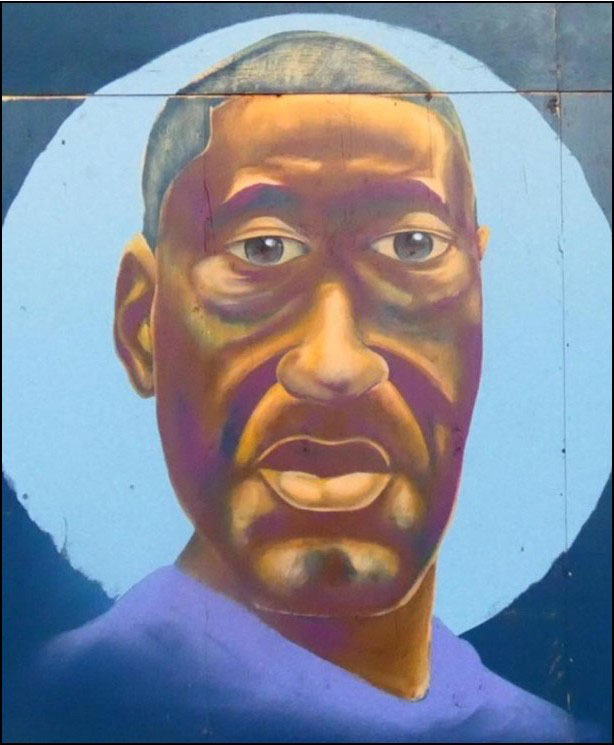
A mural featuring George Floyd temporally displayed in downtown San Jose, California.

Ten weeks ago, one of Breonna Taylor’s killers, Sergeant Jonathan Mattingly of the Louisville Metro Police Department, sat across from Michael Strahan on Good Morning America. The fraught and feeble—yet morally bankrupt cop suffering from little more than privilege managed to tell a murder story full of inconsistencies, befoul George Floyd’s memory, and when prompted—issued hope that Taylor’s mother will find a way to bare the consequence Taylor ultimately brought upon herself. In 10 minutes, despite being party to a sloppy and negligent police raid that ended the life of one and terrorized another, Mattingly managed to depict himself as the damsel.

Race had never been a factor to Mattingly who lives in a world different than you and me—where racial profiling is criminal profiling, murder isn’t really murder, rape is just cop sex, and illegal search warrants aren’t a desecration of one’s constitutional rights.

Go back seven months to the Friday afternoon of May 29th, where a scene—first seeded on the 101 freeway–soon settled on the normally uneventful grounds of the San Jose city hall, in middle California. A war zone pitting the San Jose Police METRO (SWAT) unit against incensed protestors. Profane shouts and water bottles crossed paths—midair—with amplified police commands and airborne cans of tear gas. Unlike our social justice neighbors to the north (Berkeley, Oakland, and San Francisco) this scene was uncommon. The burning of the lachrymator as it filled the air—then our eyes and lungs—of protestors, on-lookers and journalist, became as seditious as the modern day lynchings of our time. 2020 has become yet another milestone for racial inequality where the streets again speak for themselves—the same streets inspiring a 17-year-old white Trump supporter and cop enthusiast to pick a Milwaukee suburb as an ideal hunting ground.  Those aghast by the destruction, looting, and violence would be wise to consider: Would the level of anger & violence be so high if the bar for police conduct weren’t so low?

Earlier this year, a light—however dim, had been shone on the police. Stripped bare—the so called “blue lives” were paraded about the country’s town square while the Black Lives Matter movement trailed it with a ringing bell, shouting SHAME! SHAME! At least for a time.

The CATALYST: the peremptory homicide of George Perry Floyd Jr., a 46-year-old black man—strangled to death as four Minneapolis police officers circled him like a pack of wolves mid-lunch. One threatening anyone with the audacity to intervene…and the alpha male on his neck. Then came the shooting of Kenosha, Milwaukee’s Jacob Blake on August 23rd–by an officer with the fear capacity of 6-year-old girl (and a disregard for the concept of de-escalation) only furthered the disillusionment of the police race relations. Both scenes were a true testament to the founding function of our police. It brings us back to the days when officers blended in with smiling white onlookers while black men and women were captured and hung from trees like ornaments. The uniform worn by their attackers–makes them the byproduct of this lands racial epidemia, perhaps Floyd and Blake are the Strange Fruit Billie Holiday once sung of too.

Those unable to grasp the horrors of being black in the Jim Crow era, are insensible and unbothered by the residuum of it today. The decedents of the 1700’s slave patrols—those tasked with capturing, punishing, and re-implementing oppression on to those whom they felt lacked recognizable humanity—singled out, hunted, restrained, therefore robbing their detainees of control over their physical safety. The reintroduction to the origins of policing times itself congruently with our president’s introduction into the philosophy of 1960’s segregationist Governor George C. Wallace, this mystery era when America was supposedly at its greatest.

As a San Jose State University journalism student researching policing practices, I’ve seen the salivating eyes of officers relishing inconspicuous moments where they know their conduct will either go unnoticed or disbelieved. I too have been harassed and dehumanized. I too have felt the fear they impose, particularly when being black.

But before I’d conflated the race history of law enforcement with today, I find it interesting to note that my earliest police harassment often drew me to the convictions of Mary Turner—a young black woman who resided in Brooks County, Georgia in 1918–found herself decrying the lawlessness of whites and authority in her rural town when a tirade of lynchings had occurred in the search for a white farmer’s murderer. I understood her need to follow common sense over conformity despite knowing her voice would mean little more than a death sentence. One day after her husband had been one of 16 men falsely lynched for the crime, Turner was kidnapped and tied by her ankles to a tree to be set ablaze. A member of that mob took a knife to her pregnant stomach, cutting an 8-month fetus from her and stomping it to death when it fell to the ground before barraging her body with bullets. She was left hung from the tree to send a message.

Interacting with police forced me to explore my relationship with fear. Director Steve McQueen–a black brit, told the Hollywood Reporter in 2018 something of a mantra: “Sometimes you are constrained by fear. I always try to make fear my friend, because I know fears’ coming. I say ‘hey fear, how you doin’—therefore you just bring it on.”  Perhaps a sit down with tea may be the first step to confronting these blue boogeymen in dark corners.

Floyd’s murder had sparked a chemical response from police institutions across state lines—initiating what I like to call Operation Gaslight. First, a well calculated move to temporally halt a retort of BLUE LIVES MATTER by cleverly utilizing the public spotlight. Rebuking the abhorrent conduct of officers Derek Chauvin and his three partners, officers Tou Thao, J. Alexander Kueng, and Thomas Lane, debulking them like a cancer from the institution. Some falling to a knee as they claim to be the 99%, the words BLACK Lives Matter pained through gritting teeth—while patiently waiting for Floyd’s death and subsequently inarguable anger to dissipate like a morning fog. But ingrained habits die hard.


Spare the Rod, Spoil the Cop (Part 2/4)

In June, New York Police Benevolent Association president, Mike O’Meara, stood before the press against a back drop of his fellow officers—and in his best rendition of the The Elephant Man’s ‘I am not an animal’ speechquerulously denounced the notion he and his colleagues should be seen as boogeymen to be feared. Footage began to emerge of faceless officers in riot gear assaulting press, peaceful protestors and the violent agitators shadowing them. Right wing pundits conveniently conflated the victims of black-on-black crime with police shootings, making wild deplorables the common denominator. And like sweet gas lighting preserves, officers were able to eclipse reality through voicing fear of violent retributions against them for “doing their jobs”—while a McIntosh Sheriff’s deputy broke down into the lens of her iPhone, debating the fate of her egg McMuffin in this social climate. A viral video better suited—perhaps, for the officers who actively soil her badge.

San Jose’s own chief Eddie Garcia had been confronted with an incident on May 29th in which a goading officer shot a life altering rubber bullet at peaceful protestor, inflicting internal damage. Garcia responded with disappointment but was quick to praise officer Jared Yuen as a “good kid”. I wondered if Garcia’s praise would have been so solicitous had one of his sons been at the receiving end of that rubber bullet, possibly rendering him unable to bare a grandchild. Garcia later apologized for the comment after backlash.

Perhaps it’s the inability to draw a line bolder and more defined than the established blue one—lest it not be the fault of police—but of those who empower and enable them to run unleashed. San Jose’s Mayor, Sam Liccardo, has drowned out his own proposals for procedural change of police with an unmerited and highly deceptive comment proclaiming most SJPD officers to be good. The former district attorney has clearly never had a frank chat with our city’s two former Police Auditors, LaDoris Cordell and Aaron Zisser—two individuals who have reviewed the most heinous of (and mostly unpunished) accusations against officers, including the supporting evidence. 

What I see in Liccardo can also be seen in those holding decisive position on police power, with common resistance to rock a boat of policing change into uncharted territory—the possibility of dire chaos. It will be the diligently naïve and intransigent public whose hesitation—or toe dipping—into a most perfect policing system—that will only encourage a more unethical chaos, breeding toxic cops. As a country, we are slow to needed progression. The conclusion of slavery (the very workforce this country was built on) wavered and contenged on the colonial fears of the disenfranchisement and financial upheaval it would cause to the lives of slave owners. Lincoln took a begrudged leap of common sense (among other things) towards progress and reform—and while results of that decision have not quite finalized, it has progressively materialized a better and more righteous union.

Despite the condemnation and distancing of ranking officers scrambling for damage control, they stop short of relinquishing the long-standing impunity officers enjoy. Perhaps it wasn’t the death of Floyd prompting a defiance of themselves, but the reaction his death garnered. Most of the officers I’ve spoken with over the past ten years would relate to Chauvin and Co.—and the decisive conduct inculcated with their profession’s high school-like peer pressure. They understand why not one officer intervened, but critical of Officer Thoa’s inability to intimidate on-lookers out of their first amendment right to spy. Why wasn’t one of the officers holding a digital blocker to prevent filming? And officer Chauvin—who killed in the light of day what a simple police flashlight could have blocked from cameras in the black of night.

By fall, it seemed the wave of change was no wave at all. Proponents of police and—more discretely—white supremacy, have, if anything, grown emboldened by the images of Floyd’s murder. Republican senators such as Josh Hawley (R-MO) and Tom Cotton (R-AR) walked away from the event with the opinion that police needed more power through legislation.

The Minneapolis Police union vowed to see the reinstatement of Floyd’s 3 remaining killers—before they too had been indicted alongside Chauvin.  Three Wilmington, North Carolina officers were fired after a recording captured the use of racist language and their desire for a race war. Three Aurora, Colorado officers photographed themselves mocking the murder of Elijah McClain at the sight of his death–so reminiscent of the days when hung black men were photographed and sold on post cards in the Deep South. And in a tribute to the nefarious lineage of racism running through the bloodline of policing—the New York City POA’s unsettling endorsement of notorious birther, Donald J. Trump.

Social media sites belonging to the family and friends of local officers went either silent or flagrantly indignant to the vitriolic public interrogations their loved ones faced.  Ignorance runs rampant within those close to officers, blind—and at times injudicious because the blood of the black and the disenfranchised stains different on a police uniform. Is it only in the criminality of a cop when his purpose is maintained?

It takes incredible audacity to wear membership to the murders of Botham Jean, Eric Garner, Michael Brown, Stephon Clark, Philando Castillo and Alton Sterling—or to the negligent handling of Freddie Gray, Sandra Bland, and Akai Gurley—only to then claim officers are the truly misunderstood victims of these crimes. A Modus Operandi magic trick eliciting sympathy from the public that they are far more oppressed than those they silence—through no amount of rationality but plenty of entitlement.

Lynching victim Will Brown in life, and in death, year 1919. (source nebraskastudies.org)

During her time, it was the likes of Jesse Washington (a mentally ill youth), Will Brown, Marie Thompson, Mark Charles Parker—and the 3,446 dead by 1968 for their melanin deformity—who compelled journalist Ida B. Wells to state in 1909: “This is the never-varying answer of lynchers and their apologist. All know that it is untrue. The cowardly lynchers revels in murder, then seeks to shield himself from public execration by claiming devotion to woman. But truth is mighty and the lynching record discloses the hypocrisy of the lyncher as well as his crime.” Simply replace “devotion to woman” with more modern claims such as “I thought he had a gun”, same shit—different century.

If only those typified within the words of Well’s had existed at a better time and place—a decade later, I say the same of the black and brown today.

While researching this piece I recalled the murder of Daniel Shaver, a white plumber from Granbury, Texas who the nation watched—through the lens of a body camera—beg for his life before being mercilessly obliterated by a Mesa, Texas cop in a hotel hallway. These are the things nightmares are made of—the parental fear President Obama (a black man) and Mayor Bill DeBlasio (the father of a black man) express out loud against criticism. These executions are the quiet part being spoken out loud—lauding distortedly depths of depravity as acts of bravery by sworn men.  Murder isn’t murder. Privilege isn’t bad. Injustice is justice. We are to revere officers as human beings yet we are coached to survive a police encounter by way of our local bear attack survival guide.

How many officers, standing in the wings gauge their invincibility against the biblical ‘shall nots’? Officer Philip Brailsford was acquitted of Shaver’s murder in 2017 and reinstated to his department. He has reportedly since retired.

The accurate intent of law enforcement is to be the resolute factor of a situation, not the incendiary of it. One is not supposed to determine the decisions of a cop and therefore should not be blamed for the escalation of their behavior. And until this is realized, one shall not be shamed for their fear of those who claim the image of hero but the disposition of monster. And a department’s bill of guilt shall not be paid by the tax paying public—but to be made clear, those irrational enough to think that taking a police officer’s life is an appropriate reply to police brutality will find themselves working against any logical, mature solution!

Bad cops make for the best criminal justice instructors, because when listened to with a sensible ear–they tell the truth. An officer’s firearm training–I once presumed–at best called for the temporary incapacitation of a life—which to that, in 2011, a senior San Jose police officer shook his head. “You wanna take out the computer”, he said—taping a finger to his temple.

Spare the Rod, Spoil the Cop (4/4)

San Jose Police officers Eliseo Malvido and Jonathan Koenig during an arrest in July, 2015.

Among the SOLUTIONS?  If a national or local data base is implemented, this will just result in fewer sustained complaints being issued by internal affairs divisions—either out of fear for the reputation of the department or of the officer himself. The percentage of believed allegations against police officers are already disturbing low—2% of 887 allegations against SJPD were sustained in 2019, 5% of 770 in 2018, 10% of 697 in 2017—disturbing particularly if the public saw the level of evidence towards an officer’s guilt that is ignored. The disturbing part—in my opinion—is the cognizance officers have of their system. A department of officers will gossip about the latest cop to get a slap, and a group discussion of how better not to get caught and suffer a similar fate. Though sustainments are knowingly rare, no officer wants to be that cop that got sustained that year.

In San Jose, the Independent Police Auditor cannot override the final decision of Internal Affairs, though they claim they can run their disagreement to the mayor and the city manager (both of whom have no police experience) like quarreling children running to a teacher.

I’ve had an officer sustained and it is a bittersweet point of recognition in police misconduct. And what anyone from lawyers and judges, to community activist will tell you is that it is a ‘unicorn moment’ and unjustly rare. Reprimands are based on a preponderance of evidence (not beyond a reasonable doubt) and so much more. A sustainment has to be convenient, unavoidable, and uncostly to the department. As a city, we long for a community board void of political oversight and enough fire power to issue the stern judgement a conflict-ridden Internal Affairs cannot.  Where conflict of interest isn’t a factor in the review of an officer’s conduct.

IN CONCLUSION, we live in a country that has abolished slavery, struck down segregation, given women the right to vote and (reluctantly) the right to choose—we are a country as slow to embrace common sense as we are to progression.

The first step is acknowledgement that we don’t know the ratio of bad cops to good cops (I oppose categorical titles in policing but I’ll address that in another blog post). There are far more bad cops than the law enforcement community would grant you to believe (ahem-gaslighting). I have learned after ten years of research that when I encounter a new officer, I need to be cautious—but fair.

Accountability implies the existence of integrity, and is a word police need NOT be bothered with. The supreme court and law makers need to be bombarded with the term police liabilityand end Qualified Immunity. The medical industry has had its own ethical issues but doctors are held to the highest of standards and tend to make every professional decision as if their life depends on it—and it’s because their license most certainly does. The prestigiousness of the medical community is contingent on their ability to do a job few others are trained to accomplish. Nobody flies a flag for them when they leave instruments inside a body or argues that the bar for a doctor’s expectations should be lowered so we don’t discourage people from the profession. Doctors are praised for their ability to do a hard job right! So when it comes to police, a lowered bar will attract the less desirables (aka, liabilities). A place where departments— not tax payers—foot violation settlements. There is a world where police are capable of much more.

What I wish the public would do is educate themselves more about the actual practice of policing. I studied the SJPD for ten years because I loved the research, despite dealing with intimidation and some extremely dangerous officers. The police calls, the interviewing of officers, the explanation of the job through their eyes—all rare and enriching beyond reason. I appreciated learning how useless a criminal justice degree was or the proper procedure for off-duty officers to get out of traffic citations. Even when it came to the point of death threats from the department, it allowed me to see the true face of policing. I wish people would take the time to understand policing and understand it is not a field of nobility but of unprecedented moral turpitude—perhaps it takes a criminal to catch a criminal. I just wish this was admitted.

And lastly, bad cops are not the only problem. Judges, district attorneys, attorney generals (like Kentucky’s Daniel Cameron), the city attorneys who represent them, and unbothered city officials harbor in the back pockets of the police, ready to aid. It is the collective malfeasance that permits such misconduct, and if I had the ear of law enforcement, I’d urge those to embrace the retribution uproar as a road to constructive reform.

But in the process of doing this, one must realize the great injustice we impose upon police officers in our great nation. One never volunteers for discipline but cries out for it through conduct. The liability of police officers and departments needs to be higher. Too many allow ignorance to fill a void common sense leaves behind and those who know don’t want it to change—for the privilege of unlawfulness is too enticing. Limits need to set, laws of conduct established, consequences made clear, and an uncompromised ear needs to listen!

I would like to thank those who have risked their lives (the six-year-olds, the soccer moms, the college students, etc.), who lawfully protested and raised a voice this year in tribute to the unintentional Americans who lost theirs. From the slave ships, the nooses hung from fruit trees, to the Breanna Taylor’s and George Floyd’s. There will be more Strange Fruit to come.