


2020 will probably be the year of hibernation as we “shelter-in-place” in our respective corners. Some are finding the fortitude to count what they still have control over, while others are using this time to regroup. My need to regroup has involved appreciating the silver linings in the stories of skies clearing over parts of the world, or that endangered turtles are multiplying. It’s been completing Truman Capote’s In Cold Blood, while shuffling through Dua Lipa tracks (Caution by The Killers has also been on loop). Lastly, regrouping has meant working on research for my first book, which somehow makes this whole Coronavirus feel like a pro and con.
Here’s a fact about me: I love horror films…have since I was kid. There’s something about watching a Zombie terrorizing a girl on a boat dock that makes you feel a little better about the scary things in your life. While recently binge-watching old episodes of Tales from the Crypt, I came across an episode that hit a little too close to home for me—it became a reminder that it was time to blog. (And please excuse the length of this one!)
The season two, episode twenty-one segment is titled Mute Witness to a Murder. As a sexual assault survivor, this episode hit a cord with me in the same way recent releases such as the film Invisible Man (2020) and the Fox News scandal biopic, Bombshell (2019) had. Actress Patricia Clarkson played a woman who witnesses a murder outside her home, in which the trauma renders her mute. Her husband proceeds to seek medical attention for her from a doctor who also happens to be the murderer. After convincing her husband that Clarkson is not sane or self-reliant, the doctor manages to isolate her in a padded room, rendering her helpless while terrorizing her in the subtlest of ways. He tells her she is in a place of restraint, in a sanitarium he is the director of, and that he is labeling her as a ‘dangerous psychotic’; and that he is doing this because she witnessed his crime. I’ve heard those type of words before. And it always puts me in a screaming panic.
But let me start from the beginning.
In August 2009, circumstances were laid into place for me to investigate the concept of social issues within law enforcement. I soon found myself with a subject police department, a small sample group of police officers from said department, and the opportunity to alter my beliefs on the concept of policing. This would be a boot camp of sorts, coinciding with the conclusion of my journalism degree, and subsequently becoming my degree emphasis.
Ten years ago, I never would have imagined blogging about the subject of policing or my experience with this department, nor did I think I’d have enough for a book. I had planned to produce a few articles and move on. This blog will serve as a companion to my research and reflective work (my book) on the San Jose Police department.
San Jose is the tenth largest city in the US with a population just spilling over a million as of 2019, but it’s known as a ‘connector’ city. Nobody plans a family trip to San Jose unless they have someone, or something, here to visit. Maybe you’re connecting a flight here or renting a car to drive to San Francisco, or Los Angeles, or Sacramento–because the flight was cheaper or the road trip seemed enticing. But no one comes here as their getaway. We sit in the fundament of Silicon Valley, an hour south of San Francisco and a country mile north of that famous Gilroy Garlic. Oprah once reported San Jose as the city with the most eligible bachelors. Those self-proclaimed nerds you knew in high school, they’re here now. Yet, I’ve always called this place home.
And our dept…
The San Jose Police department does not rank in the top ten of the largest law enforcement agencies in the country. Still, I like to call this complex, yet comprehensible group the medium size department, even though it’s number of sworn officers have averaged about 1,151 over the past ten years.

Part of my upbringing was with this department where one of my parents worked as a forensic scientist for 30 years. As a child, I remember getting school absent excuse letters from the office of the chief on ‘Take Your Daughter to Work’ day. Shooting my first gun in the department firing range. Having a customized caricature drawn by San Jose State University professor (and former SJPD officer) Gil Zamora– the department criminal sketch artist from 1995 to 2011. Finger printed for the first time in the third grade, and hitching rides with school liaison Officer Washington to the department when I couldn’t get picked up from school on time. Snacks from the aged department cafeteria and blueberry muffins from the former city hall building across the street.
Memories of walking through the department gym to the top of the communication building to watch fourth of July fireworks…I’d been to just about every corner of that department building without a clue that I would one day be investigating the officers in there.
What does the uniform represent now? It’s hard to look at police the same as I once did. Maturity…Prestige…Nobility…Principled. But I only wipe away the words I can now say I witnessed one, or more than a few officers, obliterate.
This would be a slow forming story, a ride I was in the back seat of as I watched officer after officer take the wheel. Turning me into neighborhoods of reality I had previously only assumed fictional, rare and reserved for the cinematic.
You start from the top and dig south
Former San Jose police chiefs Robert Davis, Christopher Moore, and Larry Esquivel were the heads of this enlarged, yet seemingly little-known department. While current chief (and header of this blog) Eddie Garcia closes out this story. All four governed the department during the duration of my documented research. I have varying thoughts about each one, particularly because the conduct of a department always wears the face of its leader. When I reflect on things I’ve seen and heard, it doesn’t matter who the officer was who said or did it, it was always co-signed by the chief.
Each chief had their unique qualities:
- Robert Davis (2004-2010) was a practicing Mormon and during his time as chief, once fasted during Ramadan, showing solidarity with the local Muslim community.
- Chris Moore (2010-2012) was a former fire fighter and an active member of the California State Bar, not to mention highly educated.
- Larry Esquivel (2012-2016), whose name I’ve grown determined to remember the correct spelling of, was a teen dad. All four officers started as beat cops with this department and worked their way up.
And Chief Eddie Garcia… he’s an officer I’m still getting know, and his depiction is already making sense to me:
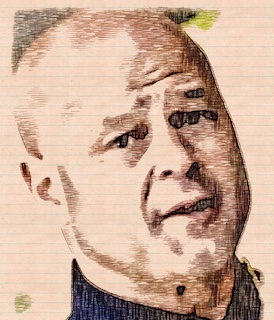
Easier on the eyes than his predecessors, the Puerto Rican native, and former militant is the “jocular” cop with an athletic build and the simper of a used car salesmen. Not just a car salesman, but a used car salesman. For he has mandated the dreamed, cleaned department. Famous for his ingratiating, heroic one-liners–accredited for making the man behind aviator shades the sweetheart of the local press. The neighborhood Ice Cream Man rose the rainbow flag before the department headquarters that once harbored in shadows a transgendered officer over a decade ago. Even acting as a hood ornament on a police cruiser as it drove through the San Jose gay pride parade. Taking underprivileged kids toy shopping, Boba tea with citizen—I’m still waiting for the Afternoon Tea Party & Ladies’ Luncheon with the chief (tea hat and lacy white gloves required).
While his “man of people” one-liners happily wade in the waters of public judgement, it’s his efficacious, yet deceptively menacing selling point that an appeased, prioritized department, equals a happy, protected public– a rhetoric that floats effortlessly and without scrutiny. An underlying mindset seemingly supremacist in its most virile form as it echoes from department to department across our vast country. So, finger to lips.
What would I say about Uncle Eddie? Or Uncle Eddy? Chief Eddie Garcia is someone I’ve seen through the eyes of local media and in the flesh. A brief encounter at the closing of a town hall meeting where he flashed a congenial smiling to a group of us, thanking our attendance. Within department walls, I’ve heard he’s an a**hole…but I take that with a grain of salt. Stopping short of the bravery and boldness once exemplified by the departments most well-know and well revered chief, Joseph McNarmara, Garcia gives way to the cool boy adoration of his rank and file. But what would Uncle Eddy tell someone in a moment of full disclosure. What would a sectional in the department disclose or bring illumination to? What happens in dark corners?
Vague claims are often made about the stature of law enforcement, and on the broadest of terms. This is something I’ve always been cognizant of—and if we are fortunate to see our closest source of law enforcement through rose colored glasses, we tend to assume the good is true, and bad images are just misinformation. That pesky “one in the ninety-nine”. I grew up this way.
While the explanation of this blog’s title is simple, it spoke to me and the way I once felt about the officers I knew and my ignoramus in the endearment and integrity I once thought was implied with the uniform. A year in a half ago, I was following a lead related to an officer in this story. On the social media page of the daughter of another officer, an old post remained, its innocence stuck with me. A photo of both men in uniform receiving an accolade with a caption attached: “Congratulations to my daddy…and my Uncle Eddy”.
Till next time.
 The Little boys in Blue